

 Русский

 June 4, 2026
When advertising is launched in several countries at once, the advertiser often sees only numbers in reports – impressions, clicks, reach. But behind these numbers it is not always clear where, in what context, and to whom the ad is actually being shown. Ad verification helps to track how effectively and correctly targeting works. Ad verification in such campaigns is needed not only to control numbers, but also to check the actual conditions of ad delivery. At the same time, it is important to understand how to conduct it to obtain predictable results.
What is Ad Verification in Simple Terms
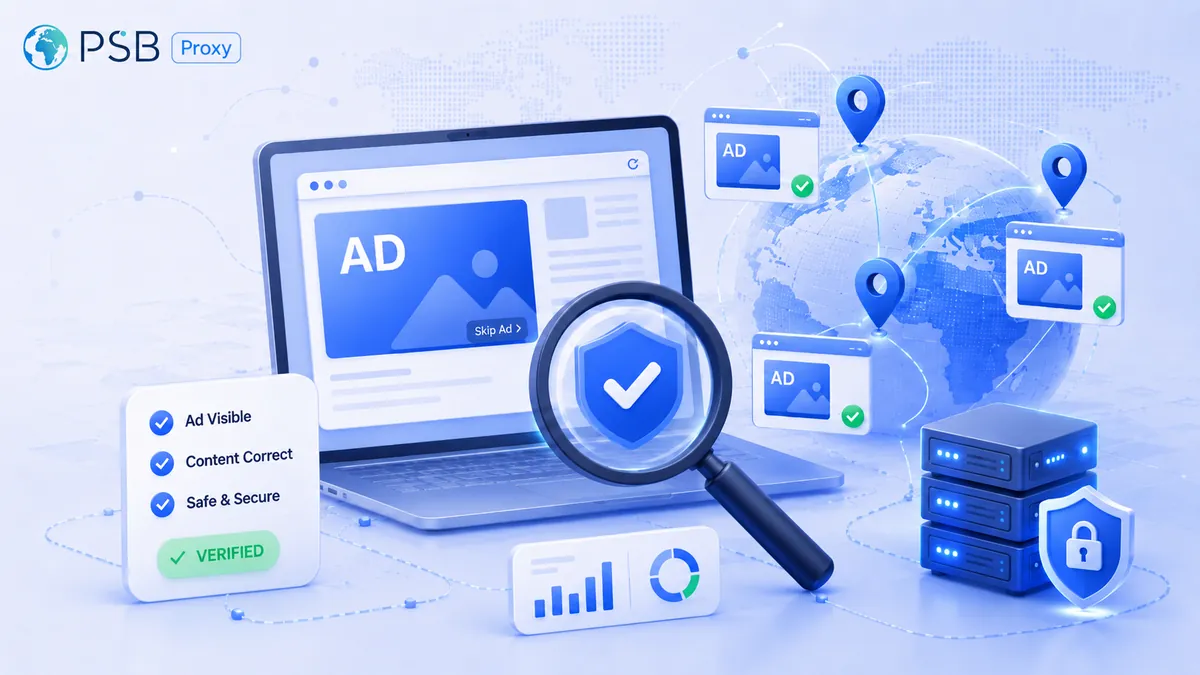
Ad verification is a check of actual ad impressions. The tool helps to find out where, how, to whom, and under what conditions the ad is actually displayed. Simply put, it is a way to make sure that the ad is shown to the right audience, in the right country, and on safe platforms, and not just "rotated according to the report."
What is Checked Within Ad Verification
During the ad verification process, several key parameters are analyzed at once:
- Geography of impressions – whether the actual country of display matches the stated targeting.
- Ad visibility – whether the ad was actually visible to the user, not loaded somewhere at the bottom of the page.
- Brand safety – whether the ad is placed next to toxic, prohibited, or reputationally dangerous content.
- Fraud activity – whether impressions and clicks are generated by bots or fraudulent platforms.
- Compliance with formats and placement conditions – correctness of banners, videos, display duration, and environment.
How Ad Verification Differs from Ad Moderation
Ad moderation is a preliminary control. It answers the question: is it even possible to show this creative according to the platform's rules. Ad verification is control after launch. It answers a different question: how the ad is actually shown in practice. In other words, moderation checks the content, and verification checks the actual placement and display conditions.
Why It Is Important to Check Ad Impressions in Different Countries
Different countries have their own media landscapes, language features, legal requirements, and levels of fraudulent traffic. Without ad verification, an advertiser may:
- pay for impressions outside target countries;
- receive distorted metrics due to bots;
- advertise on sites that harm the brand;
- lose trust from local audiences due to incorrect context.
Checking impressions by country allows you to compare the real effectiveness of markets, quickly identify problems and make decisions based on facts, not just data from ad dashboards. As a result, ad verification becomes not an additional option, but a mandatory tool for quality control of international advertising.
In Different Countries, Users See Different Ads
Even with the same campaign settings, ads may look and display differently depending on the country. This is influenced by local platforms, interface languages, popular ad formats, device types, and even internet speed. Without verification, it is difficult to understand what exactly a user in a particular country sees and whether it matches the advertiser's intention.
What Can Go Wrong in International Campaigns
When launching ads across multiple markets, there are more risks:
- impressions may go to countries not included in targeting;
- ads may appear on questionable or irrelevant sites;
- part of the budget may be spent on bots and low-quality traffic;
- ads may display incorrectly or in undesirable contexts;
- local audience and legal features may be ignored.
Ad verification helps identify such problems not after the fact, but during the campaign.
Why the Ad Dashboard Does Not Always Show the Full Picture
Ad platforms provide aggregated data but do not show the full reality. Reports may lack information about the actual ad environment, true ad visibility, or sources of low-quality traffic. Additionally, platforms are interested in showing ads, not in independent quality assessment. Ad verification complements this data and provides an objective external view.
Where Ad Verification Is Needed and What to Check in Different Advertising Channels
Ad verification is important where ads are shown in different countries, on different platforms, and through multiple intermediaries. The more complex the advertising ecosystem – international campaigns, automated buying, affiliate networks – the higher the risk of discrepancies between planned and actual impressions. Each advertising channel has its own technical features, formats, limitations, and typical errors, so the set of parameters for verification always differs.
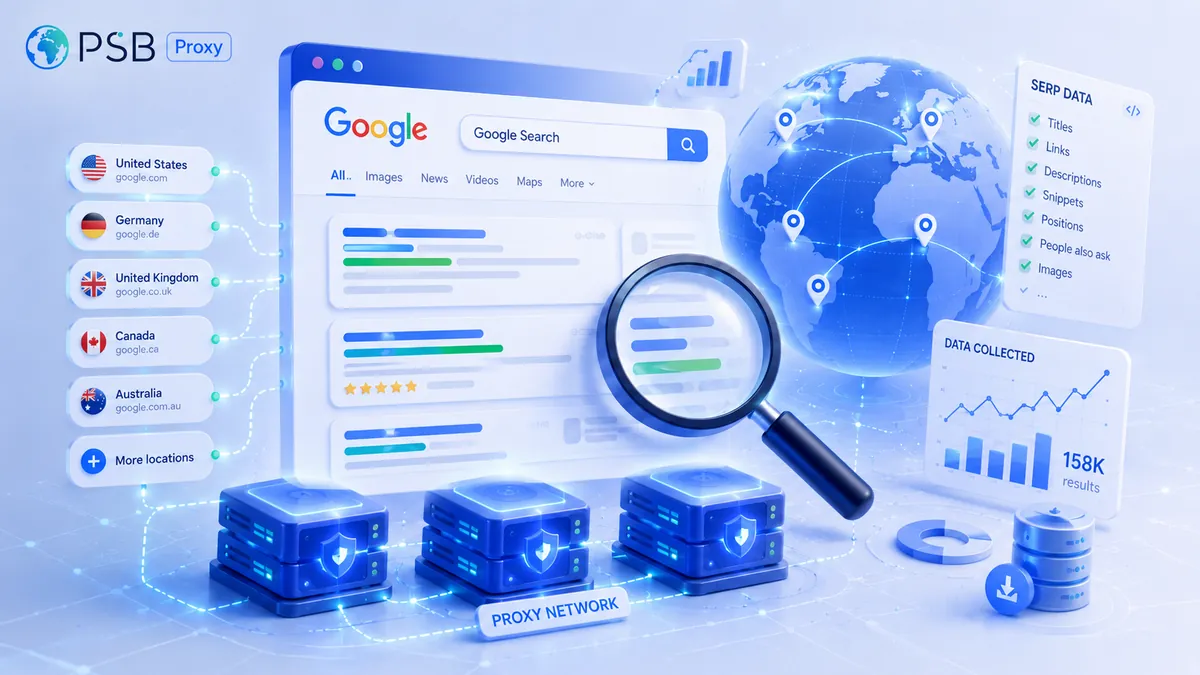
International Search Advertising
Here it is important to check:
- country and language matching of queries;
- correct ad display in local search results;
- absence of geo-substitution via VPN and proxies;
- relevance of landing pages for the specific region.
Social Networks and Targeted Advertising
In social networks, ad verification helps:
- ensure ads are shown to the right audience in the right country;
- check actual placements;
- detect impression and engagement fraud;
- assess brand safety environment.
Programmatic, Display and Video Advertising
This is one of the most critical channels for verification. Typically monitored:
- actual banner and video visibility;
- sites and apps where ads appear;
- geo and device matching;
- level of fraud and low-quality inventory.
CPA, Affiliate and Performance Marketing
In performance campaigns, verification helps:
- detect incentivized and fraudulent traffic;
- check lead sources by country;
- filter out partners violating terms;
- understand real conversion quality beyond just quantity.
E-commerce and Local Promotions
For online stores and local promos, it is important to:
- control impressions by specific regions and cities;
- check local offers and prices;
- track whether budget is going to irrelevant countries;
- protect the brand from placements next to unwanted content.
Mobile Apps and In-App Advertising
In the mobile environment, ad verification is used for:
- checking in-app placements and traffic sources;
- detecting install fraud and click injection;
- controlling installation geography;
- assessing real visibility and user engagement.
Ad verification in international campaigns is not just a "just in case" check, but a tool for managing risks, budget, and brand reputation across different countries and channels.
Why Proxies Are Needed in Ad Verification
Impression reports are displayed in the ad dashboard. But they do not provide an objective picture of what real users see in specific geolocations. This is where proxies come to the rescue. They allow you to view the ad and landing page through the eyes of a user from another country and see real impressions from the desired IP. Without proxies, Ad Verification checks are limited to general statistics and do not confirm that the ad is visible in the environment you planned.
How Proxies Help See Ads from the Right Country
Proxies substitute IP addresses geographically tied to a specific country or region. The request you send to check a banner or video passes through this server, and ad systems perceive it as a request from a real user in the desired geo. This allows you to get a live picture of which ads, in which positions, and in what context are being shown.
What Proxies Provide When Checking Ads
Proxies provide the ability to:
- assess actual ad visibility rather than just platform accounting;
- check impression location by country, region, city;
- detect scenario mismatch – when an ad is shown to a user who formally fits the targeting but should not actually see it;
- avoid distortions related to caching, A/B tests, or regional display features.
Why a Regular VPN Is Often Not Enough
A VPN ties all device traffic to a single server, but:
- does not guarantee stable geo-tracking for a large number of points;
- is often blocked by ad networks as a public VPN;
- is not suitable for automated checks of high request volumes.
Unlike VPNs, specialized proxies (residential/mobile/datacenter) provide access to different types of IPs with geo-targeting, more flexible session management, and the ability to select addresses for specific verification scenarios.
IP Rotation vs Fixed Sessions: What to Choose
IP rotation is suitable when you need to massively scan search results or check many creatives and reduce the risk of restrictions with proper request frequency.
Fixed sessions (sticky session) are important when checking sequences of actions – for example, how an ad displays when moving from search to site, or within a single user session.
The choice depends on the verification scenario: mass automated checks work better with rotation, while in-depth checks work better with fixed sessions.
How to Choose Proxies for Ad Verification
The choice of proxy type for ad verification depends on where, how, and for what purposes you check impressions. Different tasks require different quality, stability, and geographic accuracy of IP addresses.
When to Choose Residential Proxies
Residential proxies use real IP addresses of ordinary users provided by ISPs. Such proxies:
- are suitable for search and display ad platforms that block datacenter IPs;
- are effective for checking Programmatic and RTB campaigns;
- provide a more natural IP profile and typically reduce the risk of restrictions.
If you need to check ads through the eyes of an ordinary user in the target country, residential proxies are one of the most accurate options.
When to Choose Mobile Proxies
Mobile proxies use IP addresses from mobile operators. Their advantages:
- they appear natural for mobile ad scenarios;
- ideal for checking in-app, mobile banners, and social media ads;
- important for validating impressions in mobile apps and social platforms.
If your campaign targets a mobile audience, mobile proxies provide the most realistic picture.
When Datacenter Proxies Are Suitable
Datacenter proxies are inexpensive, high-speed IPs from hosting provider networks. They:
- are suitable for mass automated checks with high speed;
- are effective when checking Programmatic/display at the server request level;
- work well where a highly realistic user environment is not required.
Datacenter proxies are convenient for large-volume sampling at minimal cost, but some ad networks may block them due to "non-user" traffic.
What Parameters Are Important
When selecting proxies for Ad Verification, the following parameters are important:
- Geographic coverage – availability of IPs for required countries/cities.
- IP type – residential / mobile / datacenter; the better the IP, device, language, and scenario match a real user, the higher the verification accuracy.
- Speed and latency – important if verification is automated and large-scale.
- Session support – sticky sessions vs IP rotation.
- Resistance to restrictions – the more stable proxies operate with proper check frequency, the cleaner the results.
How We at PSBProxy Help with Ad Verification
Using proxies in Ad Verification makes checks more objective and representative of real users in specific countries and channels. For such tasks, it is important to choose a service not only by IP price but also by manageability: different types of proxies, GEO selection, rotation, fixed sessions, traffic control, and the ability to scale checks are needed. We offer residential, mobile, and datacenter proxies. Therefore, for different tasks you can choose your proxy type: residential – for checking ads and landing pages through the eyes of an ordinary user, mobile – for mobile campaigns, social networks and in-app placements, datacenter proxies – for quick technical checks and mass tasks where a highly realistic user environment is not required. Rotation and fixed sessions help choose the mode for the task: quickly check many countries or maintain one IP for a full user scenario.
How to Check Ad Impressions in Different Countries: Step-by-Step Algorithm
To ensure that ad verification helps see the real picture of views and identify errors in a timely manner, it should be conducted according to a specific algorithm.
Step 1. Determine What Exactly Needs to Be Checked
Before starting, it is important to clearly understand what exactly you are checking:
- the fact of impressions in a specific country or region;
- correctness of geo-targeting;
- compliance of platforms and environment with brand safety requirements;
- presence of creative substitution, hidden redirects, or fraud.
The purpose of the check determines both the proxy format and the depth of analysis.
Step 2. Make a List of Countries and Scenarios
For each country, you need to determine in advance what exactly is being checked: search advertising, social, programmatic, in-app, landing page, local offer, or full user journey.
The list should include country, region or city, device type, language, advertising channel, ad format, and method of recording the result.
It is important to decide in advance whether you need one IP (fixed session) or a pool of addresses with rotation.
Step 3. Connect a Proxy and Check GEO
For each country, an IP is selected that best matches a real user:
- for strict ad networks – residential or mobile IPs;
- for large-scale automated checks – datacenter IPs;
- when checking mobile campaigns – mobile proxies with operator IPs.
After connection, you need to verify that IP detection services actually see the desired country or region. If GEO is determined incorrectly, Ad Verification results will be distorted even before the check begins.
Step 4. Prepare a Clean Environment for Checking
To avoid distortions:
- clear cookies and cache;
- use a separate browser profile or anti-detect environment;
- disable extensions that may affect ad loading;
- ensure browser language and system settings match the selected geo.
This reduces the risk of seeing not a "user" version but a distorted version of the impression.
Step 5. Check Ad Display
Next, the real user scenario is reproduced:
- search by keywords (for search);
- viewing site placements (for display and programmatic);
- scrolling feed or stories (for social);
- launching an app or test environment (for in-app).
At this stage, record:
- presence or absence of ads;
- format and creative;
- display position;
- URL and domain of the platform.
Step 6. Check the Landing Page
Ad Verification should not end with the ad itself. After display, it is important to check where the user goes: whether the correct landing page opens, whether language, currency, offer, form, UTM tags, and final URL match.
If after clicking you see the wrong region, error 403/404, an extra redirect, or an unavailable form, the campaign may look correct in the dashboard but actually lose conversions.
Step 7. Record the Result and Compare with the Ad Dashboard
For objectivity, data should be documented:
- screenshots or screen recordings;
- log of IP address, country and time of check;
- list of platforms and creatives;
- repeatability of display when refreshing the page or changing IP.
One country does not mean one behavior. For an accurate picture, you can additionally use IPs from different regions or cities, compare results with rotation and fixed sessions, and perform checks at different times of day.
The final stage is comparing reality with platform reports: are there geo discrepancies, does the volume of impressions match, do the platforms correspond to those declared. If the data does not match, this is a signal for optimization, targeting refinement, or deeper Ad Verification.
This step-by-step approach allows not just to "view ads from another country", but to build a systematic check of impressions that is as close as possible to real user experience.
Common Mistakes When Checking Ads by Country
Checking ads in different countries often looks like a simple task: change geo and see what is being shown. In practice, the result is distorted due to technical factors, environment settings, and incorrect data interpretation. Below are the mistakes that most often lead to false conclusions in Ad Verification.
Checking Ads Only from Your Own Country
Such a test does not show what a user in another geo sees. In another country, the creative, language, landing page, currency, offer availability, and even the fact of display may differ.
Using an Inappropriate Type of IP
One of the key mistakes is checking through an inappropriate proxy. Datacenter IPs are often recognized by ad networks as unrealistic traffic, causing impressions to differ from real user ones. As a result, the advertiser sees a "clean" display that does not reflect real audience behavior. For accurate validation, it is important to consider the IP type and its compliance with the placement channel.
Ignoring the Influence of Cookies and Browser History
Advertising systems actively use behavioral data. If you do not clear cookies, cache, and history, the system may show personalized ads tied not to geography but to the user's previous actions. This causes the check to cease being geo-valid and turns into a repetition of an old user scenario.
Using the Same IP for All Checks
One entry point does not reflect the real picture. Within one country, ads may differ by region, carrier, and device. Checking from a single IP creates an illusion of stability, while in practice impression distribution may be segmented.
Not Considering Device and Browser
Mobile and desktop may show different ads, different formats, and different landing pages. Therefore, for correct verification, it is important to record the device, browser, language, cookies, and other test conditions.
Checking Only the Ad, Not the Landing Page
Ad Verification should include the entire journey: impression, click, redirects, landing page, form, price, currency, language, and offer. Otherwise, you may miss a situation where the ad displays correctly but the user lands on an inappropriate or non-functional page.
Clicking on Your Own Ads
Extra clicks on your own ads can distort statistics and waste budget. For checking, it is better to use preview tools, test links, screenshots, and a careful QA scenario.
Misinterpreting Ad Personalization
A common mistake is perceiving personalized ads as a "targeting error." In fact, ad platforms actively adapt creatives to the user. Without understanding personalization logic, you may mistakenly consider a campaign incorrect even though it is working within the algorithms.
Not Recording Evidence and Check Conditions
If test parameters (IP, time, geo, device) are not saved, results cannot be reproduced. In Ad Verification, this is critical: the check must be repeatable. Without logging, any conclusions become subjective.
Mixing Manual and Automated Checks
Manual checks show individual scenarios, automated checks show a mass picture. An error occurs when their results are compared directly without considering differences in methodology. This leads to false conclusions about the presence or absence of problems.
Ignoring Differences Between Channels
Search, social, programmatic, and in-app advertising operate on different delivery logics. Transferring conclusions from one channel to another without adaptation leads to incorrect assessment of placement quality.
Correct verification requires not only access to the desired geo through proxies, but also an understanding of how ad systems form impressions. Errors at the verification stage often produce a distorted picture that affects budget optimization and perception of campaign effectiveness.
When a Business Needs Regular Ad Verification
Regular verification becomes necessary not at the moment of launching ads, but when advertising campaigns begin to operate in several countries, channels, and through different purchasing models. Under these conditions, even small deviations in impressions accumulate into a systematic error: the budget is spent according to plan, but the actual traffic quality and geography deviate from the settings. Therefore, verification ceases to be a one-time procedure and becomes an element of advertising infrastructure control.
Ads Are Launched in Multiple Countries
If ads are launched in several countries at once, the impression distribution system begins to operate according to different rules depending on the region, auction, and local platforms. In one country, a banner may be shown in premium inventory, in another it may go to lower quality networks. Without regular checks, it is impossible to track where exactly the imbalance occurs and how it affects acquisition costs.
Different Landing Pages for Different GEOs
If each country has its own landing pages, language, currency, delivery or offer, regular verification helps ensure that the user lands on the correct local version.
Campaigns Are Run by Agencies, Partners or Affiliate Networks
The more intermediaries involved in placement, the more important independent verification is: where ads are actually shown, what sources provide traffic, and whether brand conditions are violated.
Programmatic and Automated Purchases
In programmatic advertising, most decisions are made by algorithms of DSP and SSP platforms. This increases the risk of low-quality inventory, hidden intermediaries, and unstable brand safety environment. Regular verification here is needed to control the traffic supply chain and exclude platforms with fraudulent activity.
Large Advertising Budget
The larger the budget, the higher the cost of error. When scaling campaigns, even 3-5% deviations in geo or traffic quality turn into significant financial losses. Regular verification allows you to identify such deviations at an early stage, before they affect final marketing effectiveness.
Performance Marketing and CPA Models
In CPA and affiliate models, traffic quality directly affects business results. Fraud, incentivized traffic, and geo mismatches lead to distorted lead costs. Regular Ad Verification helps control sources and maintain conversion purity.
Brand Reputation Is Important
Companies in fintech, medicine, e-commerce, and B2B are particularly sensitive to ad environment. Placement next to unwanted content or in inappropriate regions directly affects brand trust. Regular verification here works as a reputation protection mechanism.
Launching New Campaigns and Creatives
Each new creative (banner, video) or change in purchasing strategy is a potential point of risk. Even with correct settings in the dashboard, actual display may differ across countries and devices. Regular Ad Verification helps confirm that the launch went correctly.
The regularity of Ad Verification is determined not by formal requirements, but by the complexity of the advertising system. The more channels, countries, and intermediaries involved in ad delivery, the greater the need for constant monitoring of actual impressions.
What Proxies Do Not Solve by Themselves
Proxies provide access to ad search results from the desired country, but do not turn Ad Verification into a complete analysis system. They operate at the "entry point" level – they substitute IPs and allow viewing local impressions, but do not affect auction logic, ad personalization, or internal rules of ad platforms. Therefore, verification results through proxies should always be interpreted taking into account the limitations of this tool.
Proxies Do Not Show Full Campaign Statistics
Proxies only provide a visual snapshot of a specific impression at the time of the request. They do not reflect:
- total impression volume by country;
- viewability share;
- CTR, conversions, and post-view effect;
- budget distribution across platforms.
Therefore, proxies cannot be used as a substitute for ad dashboard analytics – they show "what the ad looks like" but not "how the campaign is performing."
Proxies Do Not Guarantee That an Ad Will Always Be Shown
Ad display depends on the real-time auction. Even with the same IP, results may differ due to:
- advertiser competition;
- frequency capping;
- request timing;
- inventory availability.
This means that absence of an ad when checking through a proxy is not always a problem – it may be normal auction variability.
Proxies Do Not Override Ad Platform Rules
Each advertising system applies its own filters:
- content and brand safety restrictions;
- filtering of suspicious IPs and sessions;
- personalization of search results;
- anti-fraud mechanisms.
Even when using the "right" proxy, the platform may change the display or restrict impressions if it considers the session atypical.
Proxies Do Not Fix Targeting Errors
If the ad dashboard has incorrect geo, audience, or language settings, proxies simply reproduce the same scenario from a different IP. The ad will be shown "just as incorrectly" but from another country. This creates an illusion of correct campaign operation, although the targeting logic itself does not change.
Proxies Do Not Automatically Detect Fraud
The mere fact of using a proxy does not mean that traffic becomes "clean" for analysis. Fraud, bot activity, and low-quality platforms remain in the system and require separate analytics: impression logs, visibility metrics, source analysis, and programmatic purchasing chain. Proxies only provide the ability to observe, but do not classify traffic quality.
Proxies Do Not Guarantee Identical Display
Even with the same IP, ads may differ due to auction, request timing, advertiser competition, and frequency capping. Therefore, two requests through the same proxy may yield different results, which is important to consider when interpreting data.
Proxies Do Not Replace Ad Verification as a System
Ad Verification includes not only viewing ads, but also:
- analysis of placement platforms and domains;
- checking visibility and display time;
- comparison with DSP/SSP and ad dashboard data;
- detecting anomalies in geo and device.
Proxies work only as a viewing access tool, while analytics and validation occur at the Ad Verification system level.
For Accurate Verification, Not Only IPs Matter
IP address is only one factor in ad impression formation. The result is also influenced by:
- cookies and user action history;
- device type (desktop/mobile);
- browser language and regional settings;
- behavioral profile (interests, previous site visits).
If these parameters are not taken into account, proxies show only a partial and sometimes distorted picture that does not match real user practice.
As a result, proxies solve the problem of geo access but do not replace a full verification system that accounts for auction dynamics, user behavior, and ad platform logic. Proxies are an infrastructure access tool, not an analysis mechanism. They provide the ability to see local ad display but do not explain why it is that way. For correct Ad Verification, they are used together with analytics, logging, and comparison of ad platform data.
Conclusion
Ad Verification helps advertisers see not only the numbers in the dashboard but also the actual impression picture: country, channel, creative, platform, device, landing page, and environment quality. For international campaigns, this is especially important because a user in another country may see a completely different result.
Proxies are needed in this task as an infrastructure tool for accessing the required GEO. They help check ads through the eyes of a user from a specific country but do not replace analytics, logs, ad platform reports, or systematic work with brand safety, viewability, and fraud risks. The more accurately the IP, browser, cookies, device, and result recording are configured, the more useful ad verification becomes for the business.