

 Русский

 January 5, 2026
The product market is changing rapidly, with prices updated daily and new players and offers constantly appearing. In such a fast-paced competitive environment, manual monitoring is inefficient and, in most cases, costly. Automating data collection through scraping allows businesses to quickly and consistently obtain up-to-date information about competitors’ products and services, giving them an advantage over those who rely solely on manual labor.
What Price Scraping Is and How It Benefits Business
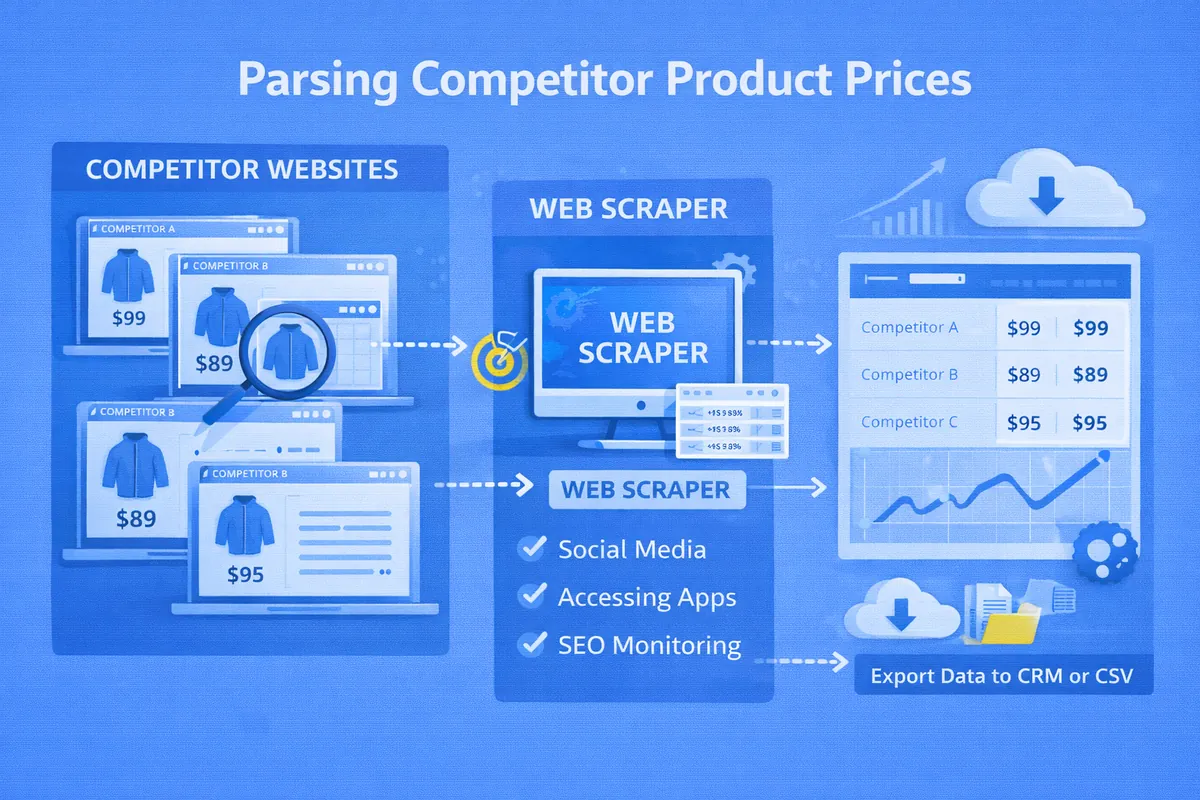
Parsing (web scraping) is an automated process of extracting structured data from web resources. A script or bot analyzes the HTML code of a page, collects information based on specified elements, generates reports, saves the data into a table, and forwards it to the business system.
Price scraping can efficiently track a wide range of information:
- Competitor product and service prices
- Stock availability and inventory levels
- Discounts and promotion dynamics
- Customer reviews and ratings
- Product promotion strategies on marketplaces
Automated collection of up-to-date information is a powerful business growth tool. Modern markets are characterized by rapid changes in trading conditions, the emergence of new players, and constant fluctuations in supply and demand. Price scraping provides instant access to data on competitors’ prices for similar products, allowing businesses to monitor changes in real time. This level of detail enables timely reactions to price increases or decreases by competitors, taking appropriate actions to maintain market share.
It is important to consider that some market participants occasionally violate manufacturer recommendations regarding the suggested retail price (SRP) by setting lower product prices to increase sales volumes. Such actions negatively impact the overall profitability of all supply chain participants, reduce the perceived value of the brand, and undermine consumer trust. Using scraping technology allows businesses not only to identify specific violators but also to collect evidence, such as website screenshots, recorded dates, and prices.
Furthermore, gathering complete market dynamics data opens wide opportunities for developing optimal business strategies. Companies gain a clear understanding of market trends, demand for specific product categories, the effectiveness of discount policies, and even customer loyalty levels. This is particularly important when operating on marketplaces, where the range of offers is vast, and market dynamics are highly volatile.
What Problems You Might Encounter and How to Solve Them
The most common problems include:
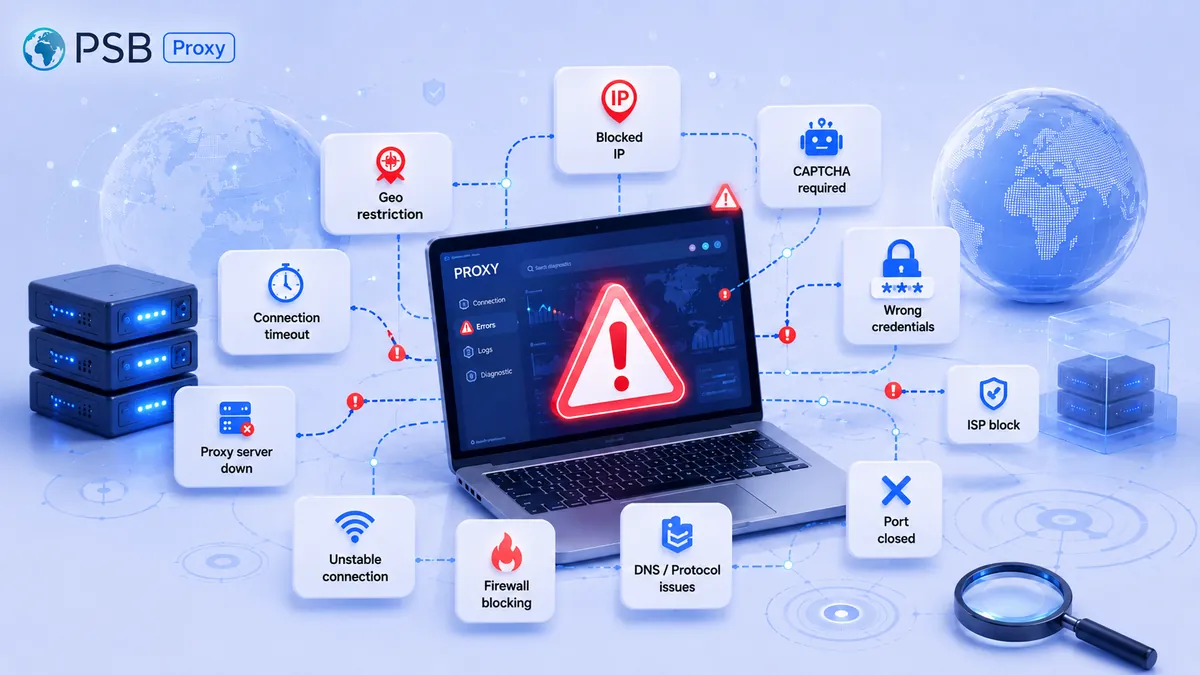
- Basic scraping barriers. The simplest protection methods are restrictions on request frequency and checking HTTP request headers. These measures are designed to detect activity typical of bots and prevent excessive server load. The solution involves IP address rotation, imitating real browser user behavior, and controlling request speed with limits on how often the resource is accessed.
- Advanced protection systems aimed at combating bots and unauthorized data use. Automated data collection may be hindered by CAPTCHAs, JavaScript and AJAX, and bot traps. Circumventing these obstacles involves using specialized services or computer vision algorithms capable of solving most types of CAPTCHAs. Using headless browsers, which fully process pages with dynamic content, also helps. Traps can be avoided through continuous monitoring of page structure.
- Powerful, comprehensive protection systems. Their complex traffic analysis algorithms accurately detect suspicious activity and block requests. Some services require client authentication checks, which further complicates the parser’s work. However, this is not a problem for a high-quality proxy server, which, with the use of specialized tools and advanced analytical methods, can bypass protections developed by professional security specialists.
How to Choose a Data Collection Tool: How It Works, Pros, Cons, and Who It’s For
Choosing the right data collection tool depends on the volume of data to be collected and the required accuracy. The selection is also influenced by the planned budget and the necessary level of technical expertise.
Ready-made Online Services (SaaS)
This is a cloud solution for a quick start and scaling of the data collection process. The user pays a subscription and gets full access to built-in tools for scraping, filtering, and data visualization. These solutions are easy to use, featuring an intuitive interface and requiring no additional software installation.
SaaS offers ready-made infrastructure: the provider’s cloud handles performance, scaling, and constant access to new features. However, ready-made online services come with high monthly fees and limited functionality, which may not always allow customization according to the specifics of a business.
PC Software
Programs for local execution are installed directly on a workstation. These applications can range from simple Windows/MacOS apps to powerful open-source frameworks.
Software works independently of the internet. It provides full control over infrastructure: all data processing is performed locally, ensuring the security of confidential information. Many programs support integration with third-party libraries and modules for extended functionality. However, installation requires a powerful computer with ample RAM. In addition, a high level of technical knowledge is required to configure and operate the software effectively.
Custom Script by a Developer
This option allows creating a unique tool perfectly tailored to a company’s specific needs. The client defines the requirements and receives a customized, fully configured solution. The script is optimized for the specific workload and business requirements. When developed correctly, it provides maximum performance.
However, creating a quality solution takes time, and professional development is more expensive than standard options. Ready-made scripts require ongoing maintenance to ensure functionality and updates.
How to Implement Price Monitoring: Step-by-Step Guide
Implementing successful product price analysis can follow this algorithm:
- Define Monitoring Goals. Determine what should be achieved through monitoring: maintaining optimal profitability, responding to dumping, identifying opportunities to raise prices, preparing for seasonal demand changes, or other objectives.
- Select Competitors and Products for Monitoring. Identify the key market players whose actions have the greatest impact on your business. Consider factors such as the scale of competitors’ operations, geographic coverage, and product assortment. When selecting products, focus on leading items, competing products, new releases, and potential bestsellers.
- Match Products by Similar Characteristics. Ensure that you are comparing truly identical or similar items in terms of material, country of manufacture, properties, quality certificates, etc.
- Choose and Configure Monitoring Tools. When selecting a tool, consider your budget, data update frequency, information availability and accuracy, integration interfaces with CRM and ERP systems, and other parameters. After selecting a tool, it is important to configure it correctly, as the system’s efficiency depends on this. Set parsing frequency, monitoring parameters, and depth.
- Set Up Notifications. Choose the most convenient notification method: e-mail, SMS, push notifications, or corporate messengers. Examples of events to trigger notifications: price changes by a set percentage, the appearance of a new seller on the marketplace, or a major competitor sale.
- Make Decisions Based on Collected Data. Systematically study monitoring reports and draw detailed conclusions. Depending on the observed situation, possible actions include setting special promotions and discounts, increasing or decreasing product prices, or revising the product assortment matrix.
Mistakes and How to Avoid Them
Incorrect use of scraping can lead to resource losses and shortcomings in decision-making. A common mistake among beginner users is the desire to collect the maximum amount of data without understanding its usefulness. Collecting unnecessary information increases time and financial costs, reduces the quality of analytics, and complicates the interpretation of results.
Another mistake is trying to save money on proxies. This can lead to constant blocks, low data transfer speeds, and unreliability of the collected information.
Often, companies collect large volumes of data but do not use it. Storing unprocessed information only slows down decision-making processes and increases costs for data storage administration. Create mechanisms for automatic data processing and analysis. Use analytics dashboards that make it easy to interpret and apply the information. Periodically evaluate the usefulness of collected data and remove outdated or irrelevant metrics.
The process of implementing and organizing effective price monitoring in the modern market is complex but extremely important for any business. Proper goal setting, choosing the right tools, and constant attention to data protection issues allow you to extract maximum benefit from available information. It is important to avoid common mistakes. Every decision should be deliberate and contribute to achieving the set objectives.