

 Русский

 January 5, 2026
Phone number scraping is the automated collection of customers’ contact information from websites. There is no need to manually gather phone numbers from hundreds of pages—this process can be automated to achieve faster results. The collected information can be used for marketing research, working with potential clients, analyzing competitors’ activities, and solving other business tasks. Automating data collection makes it possible to obtain large datasets that can generate profit in the long term.
Where to Find Data and What Exactly to Parse?
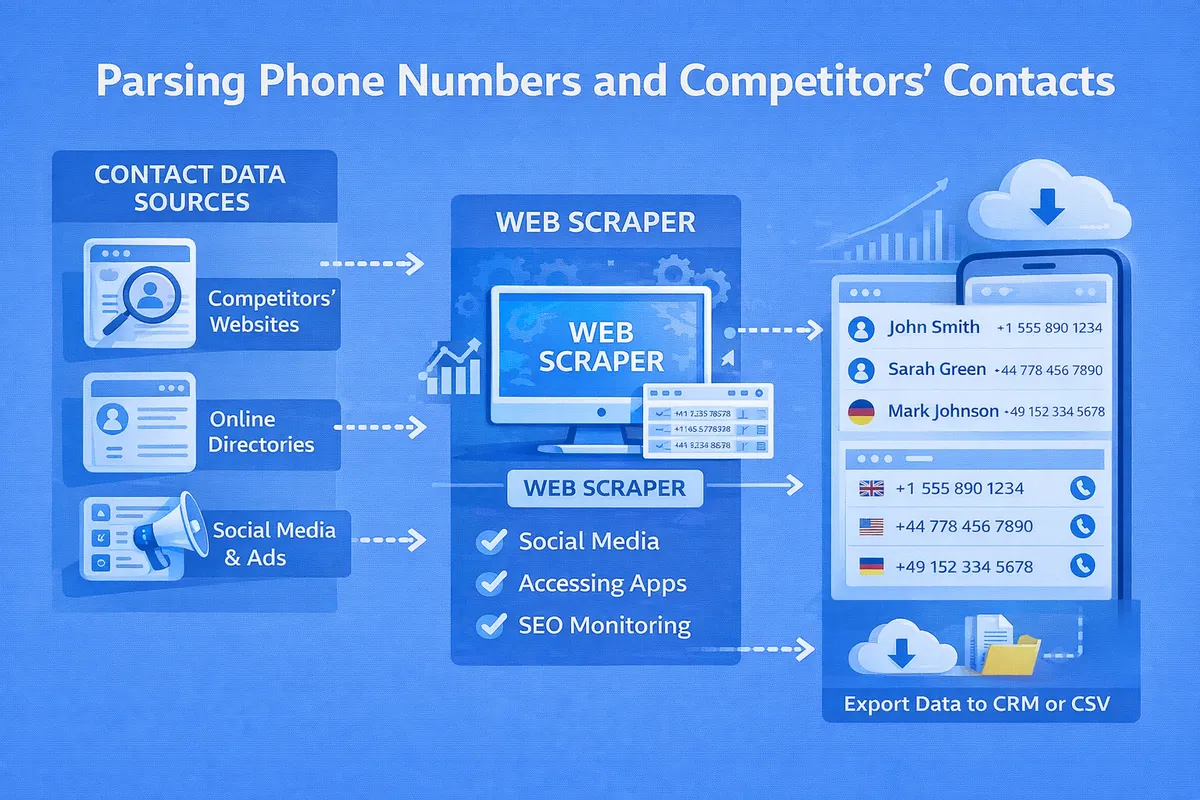
To search for competitors’ phone numbers and build your own client base, you can use various sources. The most effective among them are:
- Competitors’ websites. Automated data collection allows you to quickly build a useful client database and analyze competitors’ contact details within your industry.
- Marketplace clients. Sellers’ phone numbers can be used to build a client base and to analyze the industry situation or conduct marketing research.
- Business directories. This makes it possible to immediately collect thousands of company phone numbers in a specific region or industry; the resulting database becomes an effective promotion tool.
- Social networks and professional platforms. User data can be collected to promote products and services. However, it is important to remember that personal phone numbers are protected by personal data laws, and their use must comply with legal requirements.
Technical Aspect: How Parsers Work for Collecting Contacts
The core principle of a parser is analyzing a web page, locating the required element on it, and saving that data to a database. The program detects all phone numbers present on the page and adds them to a list. The more precise the settings, the more useful the collected information will be. A more detailed algorithm of how a parser works when collecting phone numbers is as follows:
- The user specifies what kind of information needs to be found. For example, phone numbers in formats such as +7, 8-9XX, +375, and others.
- The program sends HTTP requests and fully downloads the page or only its HTML code.
- From the entire set of downloaded data, the required information is extracted, while all other data is discarded.
- The collected numbers are converted into a file in the format required by the user, for example, .txt or .xlsx.
As a result, the user receives a large list of phone numbers. However, not all of them will be useful for further use. To improve the effectiveness of scraping, the results should be cleaned of unnecessary information. For example, you can configure the output to display only numbers in the format +79XXXXXXXXX, or select numbers with specific regional codes, such as only 343 or 3439 for users from the Sverdlovsk region.
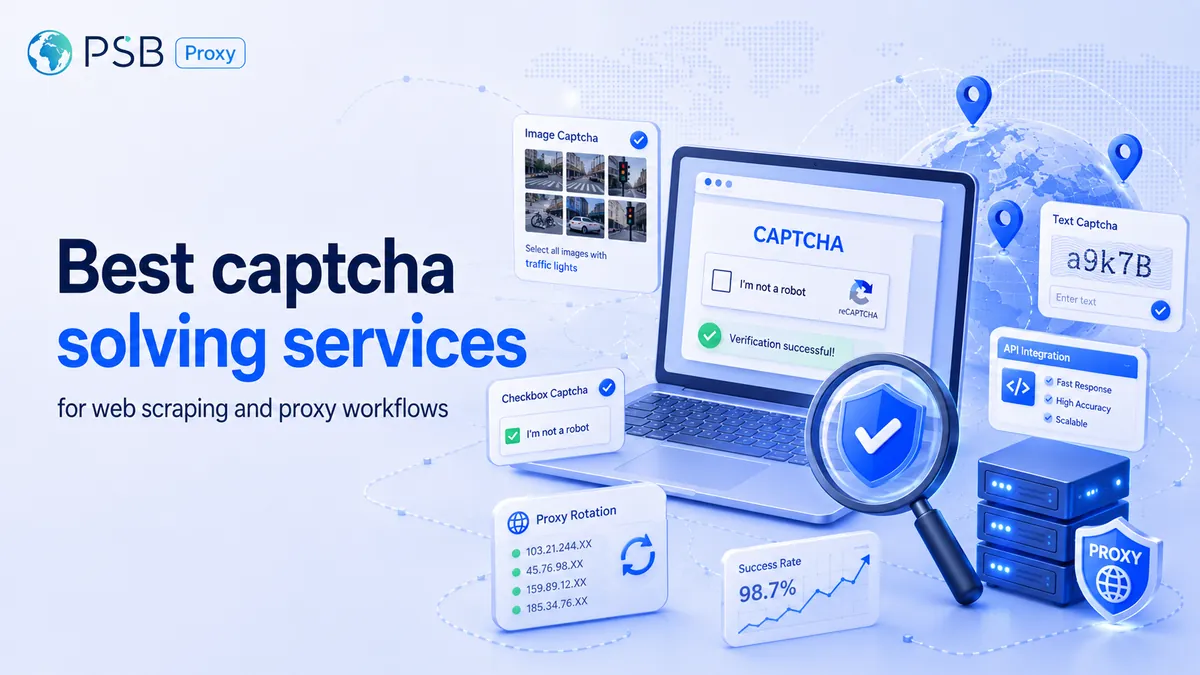
Website owners try to protect their resources from automated data collection. To do this, they publish phone numbers in different formats or hide them—for example, the user must first click an image with the text “Show number.” Detection of mass requests leads to quick blocking of the program, since many websites have built-in protection against bots.
Why Parsers Get Blocked and How to Bypass Restrictions with Proxies
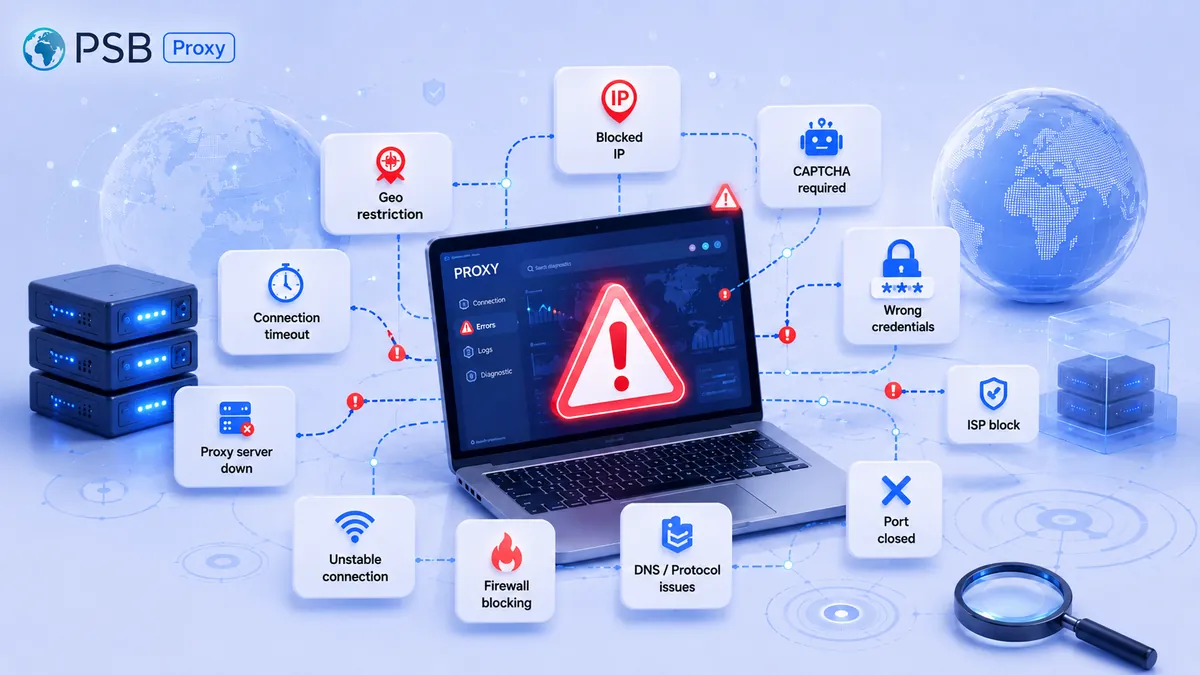
Parsers are blocked because website owners aim to protect user data from theft and from being used for spam mailings and calls. Companies hide their customer databases to compete with rivals, while classified websites and social networks block mass requests to counter spam and fraud.
Blocking can be bypassed by using proxy servers. They act as intermediaries between the website and the user, mask the real IP address, and help maintain anonymity online. When scraping phone numbers, proxy servers make it possible to distribute requests and limit their speed in order to bypass restrictions and imitate the behavior of real users.
There are several types of proxy servers, each with its own advantages and disadvantages for scraping:
- Datacenter proxies. They are designed to handle a large number of simultaneous requests and are suitable for scraping information from websites with open data and no strict protection. For example, they can be used to collect contact information of competitors from online stores. They are effective on websites without CAPTCHAs or advanced anti-bot mechanisms.
- Mobile proxies, which use IP addresses of mobile devices to send requests. Security systems tend to be more tolerant of them, since such IP addresses are shared by many users and the same IP can belong to multiple people at once. These proxies can be used to collect data from protected websites, as they are less likely to be blocked. However, their cost is relatively high.
- Residential proxies. They use IP addresses of real users, which minimizes the risk of blocking. With their help, it is possible to collect information even from highly protected websites, such as official banking resources. They are resistant to blocks, but they are also expensive, so their use must be economically justified.
Proxy Strategies for Data Scraping
To collect user contact information with proxy servers and avoid blocks, the following key strategies can be used:
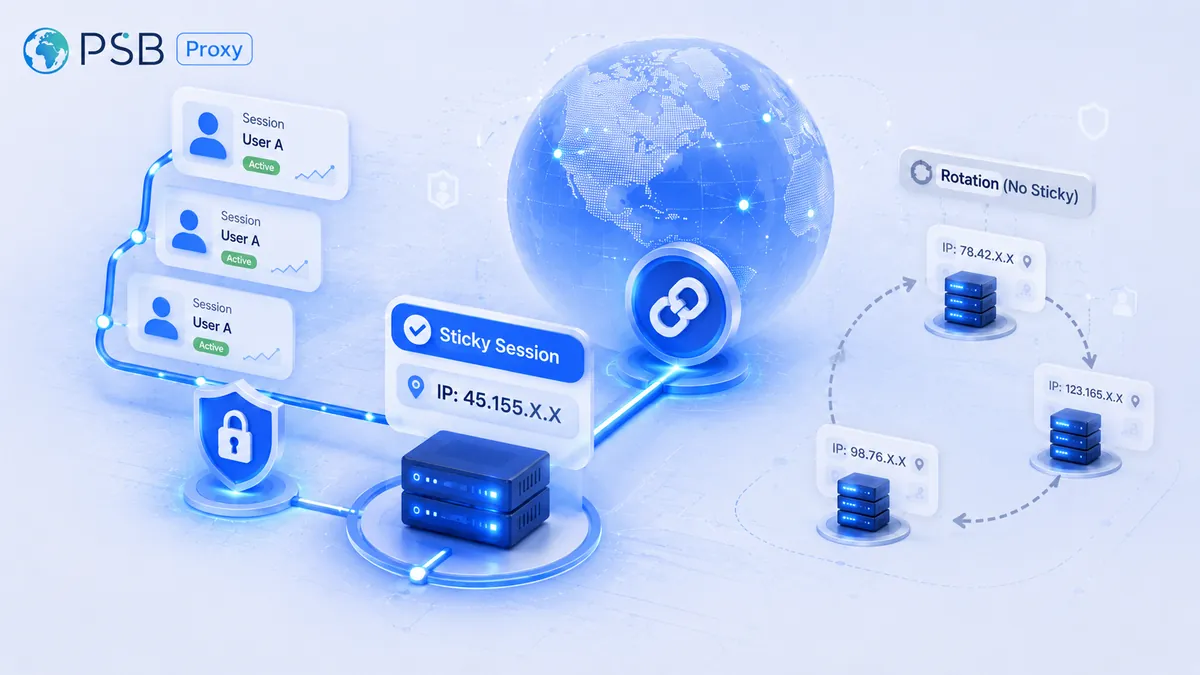
- IP Rotation. The program automatically changes the IP address at set time intervals, limiting the number of requests coming from a single IP. This reduces suspicion and prevents blocking by the website’s security system.
- Delays. Instead of sending requests continuously, the program introduces pauses that mimic real user behavior. This significantly lowers the risk of being blocked.
- Geolocation. To bypass geographic restrictions on websites, proxies registered in the country where access is allowed can be used.
Choosing the right strategy ensures you can avoid blocks and successfully build large, useful databases.
Tools
While you can develop your own scraping program, it is much easier to use ready-made programs and services. Some offer free or limited free access, but the most powerful and convenient tools are usually paid.
Some of the most popular tools for data scraping, including phone number collection, include:
- Octoparse – a ready-made program that does not require coding. Simply select the elements on a website, and the program starts automatic data collection.
- ParseHub – another program using visual scraping techniques. It is powerful and can work with dynamic websites where content loads only after clicking a button or scrolling.
- AI-UP – automates phone number collection and integrates the data into a CRM. Allows filtering collected data by categories and regions without code changes.
- BeautifulSoup – a Python library for scraping that allows locating specific information on web pages. It’s free and suitable for automating data collection.
This is not a complete list of tools and services for scraping. The choice depends on your objectives, budget, and the complexity of the data collection.
Launching Data Collection: Step-by-Step Guide
To start collecting information, follow these sequential steps:
- Define the objectives of data collection. For example, you may want to collect phone numbers in the format +79XXXXXXXXX. Make a list of websites to collect data from. Sources can include competitor websites, business directories, online stores, etc.
- Choose the appropriate tool and configure tasks. Programs like Octoparse or ParseHub have intuitive interfaces and do not require programming skills, making them suitable for beginners.
- Select a suitable proxy server and enter its details in your device’s network settings. The service provides an IP address and port that must be entered in the settings.
- Configure scraping parameters. You can account for different phone number formats, e.g., +7 (999) 123-45-67, 8-999-123-45-67, or 9991234567. After detection, the information will be cleaned of unnecessary characters and formatted according to your output requirements.
- Start scraping and verify data collection. With correct settings, cleaned and structured data will be saved and ready for use.
Legal and Ethical Aspects: What Is Allowed and What Isn’t
Not all data from competitor websites or online stores can be used freely. Federal Law FZ-152 regulates the collection and processing of personal data, and violations can lead to hefty fines or legal action.
- Allowed: Collect contact numbers openly published by website owners or users, such as on contact pages or business cards of organizations. If no login or password is required, such information is considered publicly accessible.
- Not allowed: Collecting numbers from closed databases or private accounts for commercial purposes is illegal. Competitor client lists can be considered trade secrets, and using such data can result in legal consequences.
How to Use Collected Data Effectively
Collected data can be used legally in several ways:
- Competitor audience analysis. Understand their weaknesses and develop your own business strategy.
- Target audience verification. Collecting and analyzing user data provides a more accurate profile of your audience, which helps refine marketing strategy.
- Targeted advertising campaigns. Use contacts from specific audience segments to deliver precise and highly effective marketing messages.
In summary, phone number scraping can be a useful tool for business development, but all data must be used in compliance with legal regulations.