

 Русский

 March 23, 2026
A proxy server is an intermediate node between the client and the target resource for accessing resources, testing websites, monitoring marketplaces, automation, and other network tasks. However, many web services are protected by anti-bot systems, and requests from the same IP addresses are blocked. Their rotation can reduce the risk of blocks. We will explain how to change addresses, what types of proxies exist, why dynamic ones reduce the risk of bans, and what to consider when choosing.
Which Proxies Are Needed for Rotation
Account owners on social networks and information consumers know that using a constant address often leads to an IP ban due to platform limits on the number of sessions. Many resources block users from specific countries due to violations of terms, spam mailings, hacking attempts, or suspicions of using bots or scripts. For this reason, users cannot access content for a day or more. Those who work with traffic and beyond need a stable connection without bans or CAPTCHA after every click.

To send multiple requests for the purpose of collecting information, monitoring load on corporate networks, or tracking traffic, users are forced to change IP addresses. For this purpose, there are rotating (dynamic) proxies, which replace them by timer, by command via an API interface, or when following links. When making a request or parsing, it automatically selects a new IP address from a regularly updated pool. Sites do not have time to detect repeated requests and respond to them. IP rotation also allows you to:
- adapt the proxy server to your tasks;
- avoid blocks by anti-fraud systems;
- obtain information from resources with geographic restrictions;
- avoid bans and blacklists;
- maintain confidentiality while surfing;
- adjust the sending speed.
The choice of proxy type is important when creating applications used for network tasks. It directly affects Python's functionality, as well as continuous operation and anonymity.
Residential
Residential proxies use IP addresses associated with home or user networks, so they often appear less suspicious to websites than server IPs. For protected sites, requests look like user traffic rather than a stream of automatic requests from data centers coming from bots or scrapers. With each request, residential proxies change the data within a specified time interval. The user can configure the frequency of address changes and select the geolocation. Key advantages: fast connection, stability, reliability. Suitable for the following purposes:
- Web scraping;
- Parsing and monitoring;
- Multi-accounting on social networks;
- Strategy testing;
- P2P trading;
- Bypassing anti-bot systems;
- Collecting information from protected resources.
Mobile
This is a convenient version of proxies for 3G/4G/5G, LTE, supporting HTTP, SOCKS5, oVPN, and UDP protocols. The distinctive feature of mobile proxies is the dynamic change of IP addresses from the operator's pool, since traffic passes through the mobile network. Thanks to the large-scale sharing model, thousands of clients use one address simultaneously. They change automatically with each request, by timer, or via AT command, which minimizes the repeatability of fingerprints. Websites perceive connections as coming from real users and do not resort to bans for fear of blocking access for others. The trust from websites makes this version optimal for working:
- With accounts;
- For parsing;
- Traffic arbitrage;
- Advertising monitoring;
- Bypassing anti-bot systems in TikTok, Instagram, Avito, Google Ads.
Datacenter
Datacenter proxies are not tied to mobile providers, are distinguished by predictable behavior, and due to the large pool in the cloud infrastructure, they are convenient for scaling. They use IP addresses from data centers that do not belong to real users/devices. They are perceived by websites as a technical resource rather than unique identifiers. Protected sites recognize addresses as server-based, but sometimes identify them as datacenter IPs and ban them. Datacenter proxies are suitable for tasks where server resources, high speed with minimal ping, and load testing are the priority. They are used for:
- Caching;
- Testing web platforms and applications;
- Automating network tasks;
- Checking ads and links;
- Mass data collection in a short time;
- Price monitoring on e-commerce platforms.
Proxy List and Basic Connection in Python
Browsers do not offer proxy servers themselves; they only provide the ability to connect from a list. Some support built-in settings (Firefox), system OS settings (Chrome, Edge), and extensions. The exceptions are specialized browsers (Tor Browser, UR Browser) with integrated servers. In anti-detect browsers that transmit altered data, different types are configured for each browser profile (GoLogin, AdsPower). Identification systems perceive them as unique users.
def get_session(proxies):
# create an HTTP session
session = requests.Session()
# select one random proxy
proxy = random.choice(proxies)
session.proxies = {"http": proxy, "https": proxy}
return session
There are several ways to organize rotation. The simplest is creating a list of proxies to select an address randomly or in sequence. Free proxies with filters by protocol type, country, speed, privacy level, ports, and statuses can be found on sites like 2ip.ru, toproxylab.com, hide-my-name.com, proxyfreeonly.com. However, they often experience connection timeouts, and the lifespan of addresses is limited.
Providers offer convenient intelligent solutions with automatic rotation. For example, Zyte Smart Proxy Manager (formerly Crawlera) integrates with the requests library in Python, filters out non-working proxies, and optimizes requests for anti-bot systems. After registration, users receive an API key. When importing HTTP requests, it selects, substitutes, restricts, and bans suspicious IP addresses, handles headers, and supports sessions.
Random and Sequential Method
Some services, in addition to lists and pool support, also offer automated session creation and connection type selection. They also monitor connection status and remove non-working addresses. In the case of a dynamic server, they change addresses randomly or in order.
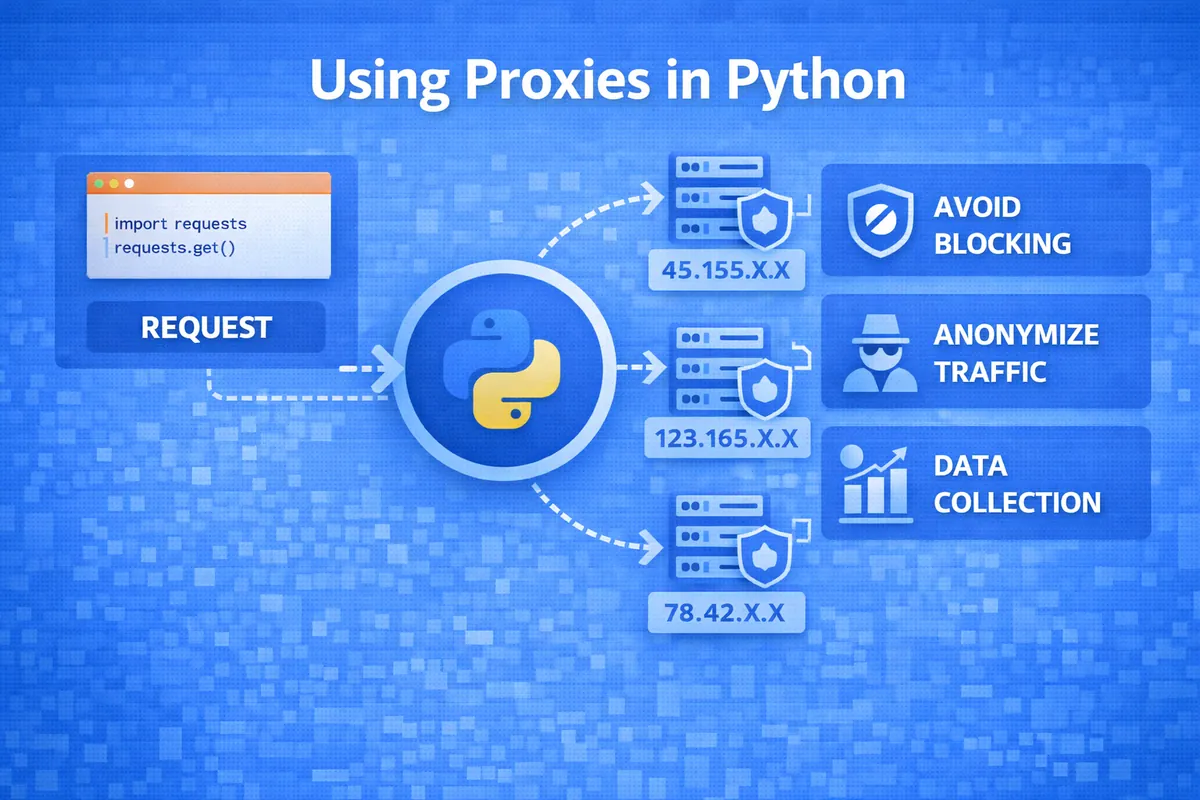
Thanks to libraries and integrations, Python offers tools for programmable rotation. It is convenient for importing HTTP GET and POST requests, managing parameters and headers, and processing responses. Advanced users configure the software themselves, specifying address replacement at the code level using the installed Python Requests library. The proxies parameter is set as a dictionary. Then the script randomly or sequentially selects an address from a list specified in the code or from an uploaded file. With each new iteration, the script sends and switches the proxy to the next version from the list, ensuring constant IP address renewal (Example code).
import requests
import random
# List of proxy servers
proxies_list = [
'http://proxy1.com:8080',
'http://proxy2.com:8080',
'http://proxy3.com:8080',
]
# Function to select a random proxy
def get_random_proxy():
proxy = random.choice(proxies_list)
return {'http': proxy, 'https': proxy}
# Request handling block
try:
# Get a random proxy
proxies = get_random_proxy()
# Perform HTTP request
response = requests.get('https://example.com', proxies=proxies, timeout=10)
# Print status code of the response
print(f"Status code: {response.status_code}")
except requests.exceptions.RequestException as e:
print(f"Error: {e}")
Smart Rotation: Error Handling and Retries
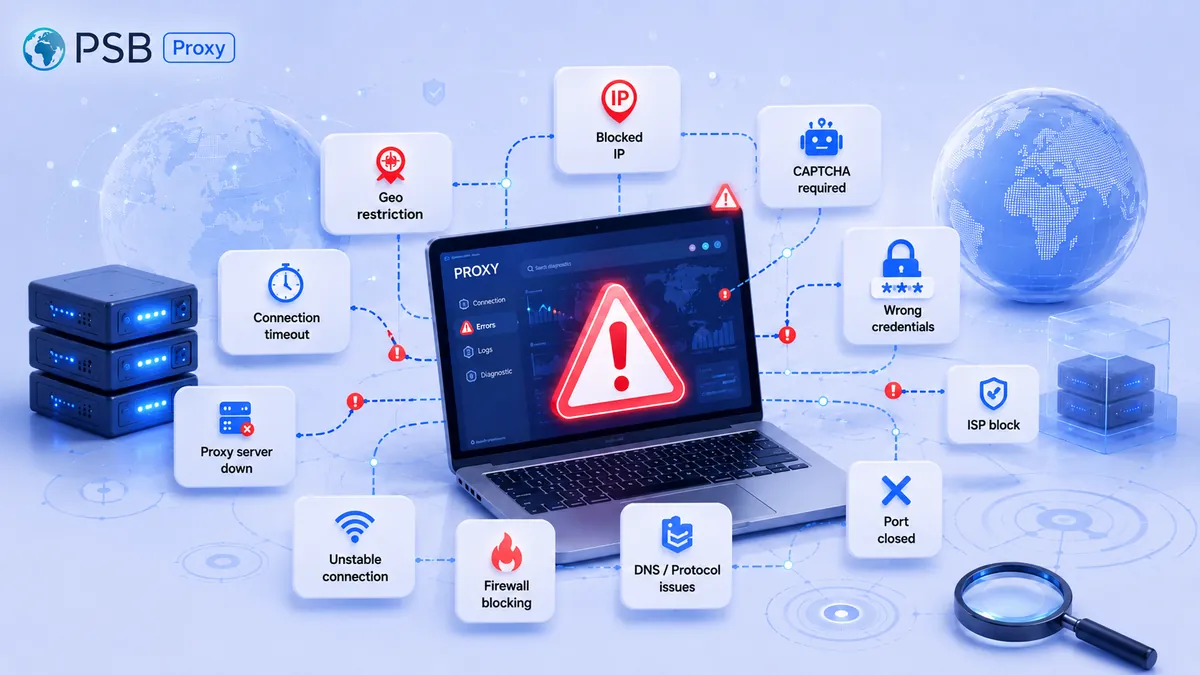
For stable operation, more complex management strategies are used. If some servers are unavailable or blocked by the site, smart rotation saves the day. It automatically handles connection errors and resolves authentication configuration issues. If there is a bad gateway or too many requests, the script switches to another proxy and sends the user request via a different route. If the attempt is unsuccessful, the program selects the next version and imports the request. In this way, the smart mechanism minimizes the risk of failures and manages operability.
Advanced Rotation: Sessions, Cookies, and Behavior Emulation
For well-protected web resources, changing the IP address alone is not always sufficient. Advanced bypass systems use intelligent monitoring mechanisms to analyze behavior, including scrolling, user pauses, and more. Advanced rotation:
- Saves cookies and session identifiers in the browser between requests for authorization and session continuity;
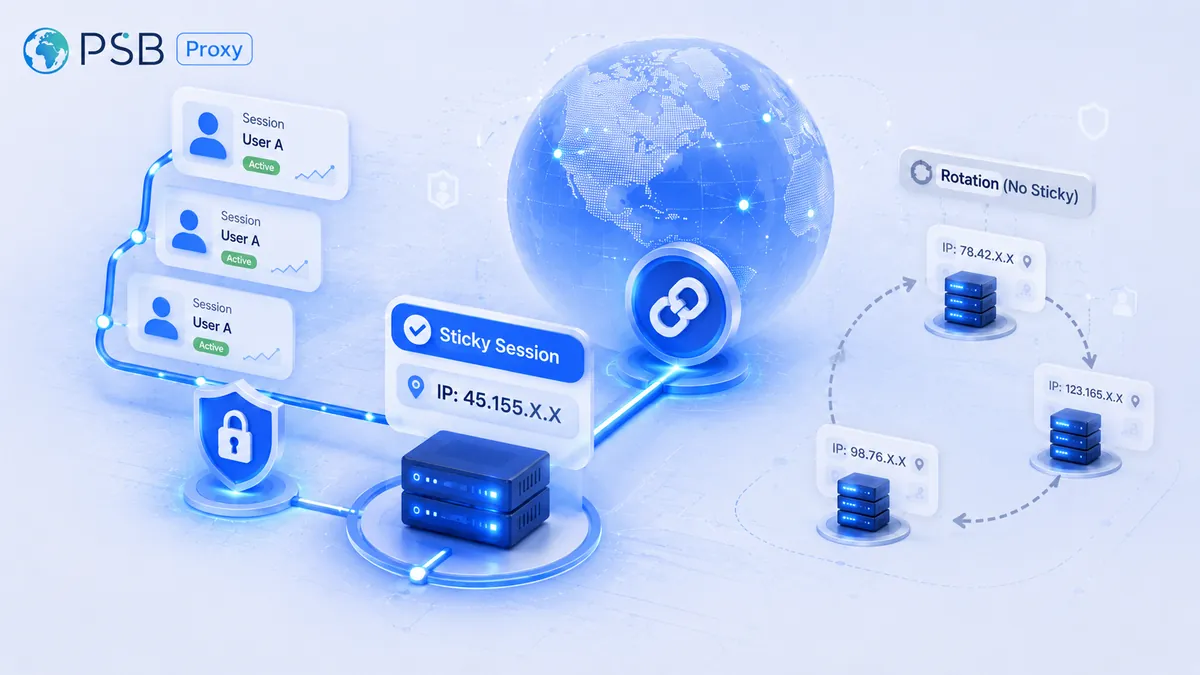
- Binds proxies to sessions and, if necessary, changes them along with saved cookies;
- Reproduces pauses, clicks, and navigations with randomization to avoid detectable patterns and create realistic activity simulation;
- Spoofs User Agent headers, synchronizing with screen resolution, plugins, and other attributes;
- Additionally performs Referer rotation for search and relevant social media transitions;
- Limits request frequency per second to avoid suspicious activity;
- Adjusts strategy when website protective barriers are strengthened;
- Changes the server type when CAPTCHA is detected;
- Takes into account geolocation, mouse scrolling, and WebRTC leaks.
Integration with Automatic Rotation Services
This is used to connect to specialized platforms for centralized process automation. As a result, users obtain managed rotation without the risk of failures under load. This is important for large-scale web scraping, monitoring, analysis, and geographically distributed addresses.
Integration is used for:
- Regularly updating the proxy list, automatically loading and filtering new addresses;
- Configuring parameters by time, number of requests per IP, and speed checking;
- Correct synchronization of session identifiers and cookies for authorization and data transfer;
- Importing ready-made configurations (JSON, YAML) for quick template-based work, direct loading, rotation setup, and error reduction;
- Switching to another proxy during blocking/overload, monitoring responses from websites.
Testing: How to Ensure Rotation Is Working
To verify that the system is correctly performing its tasks, users perform comprehensive checks. This identifies existing issues and ensures stable rotation. Automated testing minimizes the risk of missed errors. The testing plan includes:
- Logging IP addresses by time or number of requests;
- Analyzing performance and errors 403, 429, 503 indicating blocking/overload;
- Checking connection stability and speed;
- Changing IP according to settings;
- Monitoring response time;
- Simulating user behavior;
- Testing authorization for session and cookie persistence, and responses to blocking;
- Data visualization;
- Scripts for regular proxy health checks.
Dynamic proxies and advanced rotation strategies reduce the risk of detection and blocking, making them indispensable for testing, large-scale information collection, monitoring, and solving other internet-related tasks. Proxy rotation in Python minimizes the likelihood of getting banned in various scenarios, ensuring continuous application operation and user anonymity.