

 Русский

 June 1, 2026
If you work in traffic arbitrage, you know this well: launching a campaign is only half the job. The other half is making sure Facebook (an organization banned in the Russian Federation), Google, or TikTok do not figure out who you are and what you are doing. Advertising platforms have long since turned into real detective agencies: they analyze every click, every IP address, and every browser fingerprint. In this article, we will look at how exactly they identify you and which tools can help you work without bans.
What an advertising platform sees when you log in to an account
When an arbitrage specialist opens an ad account or launches an ad, the platform instantly collects a whole package of data:
- IP address — its type: datacenter, residential, or mobile; reputation history; and whether it belongs to known proxy providers.
- ASN — the autonomous system that makes it possible to identify which provider the traffic is coming through. Datacenter IPs are quickly revealed by an atypical ASN.
- Geolocation vs. browser settings — if the IP points to Warsaw, but the browser language is Russian and the time zone is Moscow, that is a contradiction.
- On-page behavior — scroll speed, clicks, session duration. A bot behaves differently from a real person.
- User-agent and fingerprint — a combination of browser parameters that creates a unique “fingerprint.”
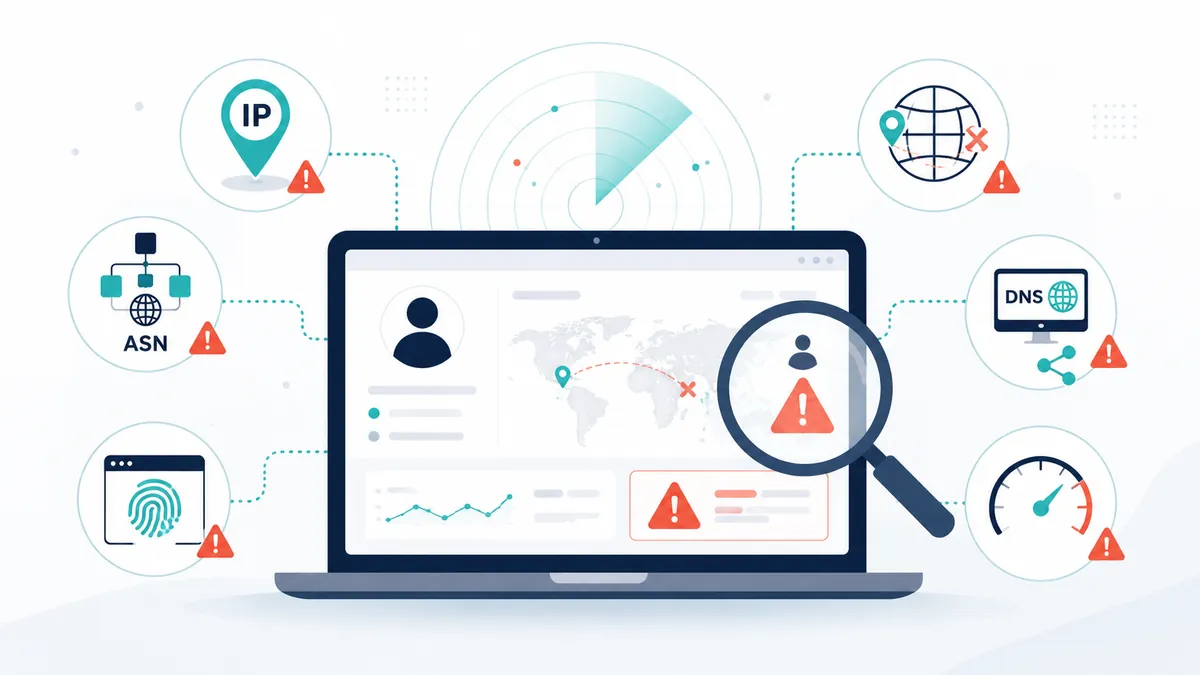
Based on these signals, platform algorithms decide whether they are dealing with a real user or someone trying to bypass moderation.
How platforms detect proxies
Not all proxies are equally “invisible.” Advertising platforms use several detection methods:
1. Databases of known proxies and VPNs
There are constantly updated blacklists of IP addresses that belong to datacenters and known proxy providers. If your IP appears in such a database, the account is at risk.
2. ASN analysis
Datacenter IP addresses belong to hosting providers such as AWS, DigitalOcean, and Hetzner. Platforms know these ranges very well and treat them with increased suspicion.
3. DNS and WebRTC leaks
Even with a proxy enabled, a browser may “leak” the real IP address through WebRTC or DNS requests. Platforms know how to detect this.
4. Connection speed and latency
Suspiciously low ping from an “exotic” country may indicate that the user is actually located somewhere else.
Solution: PSB Proxy residential proxies
This is why residential proxies are critical for arbitrage work: they are tied to real IP addresses of real users, not to datacenter servers.
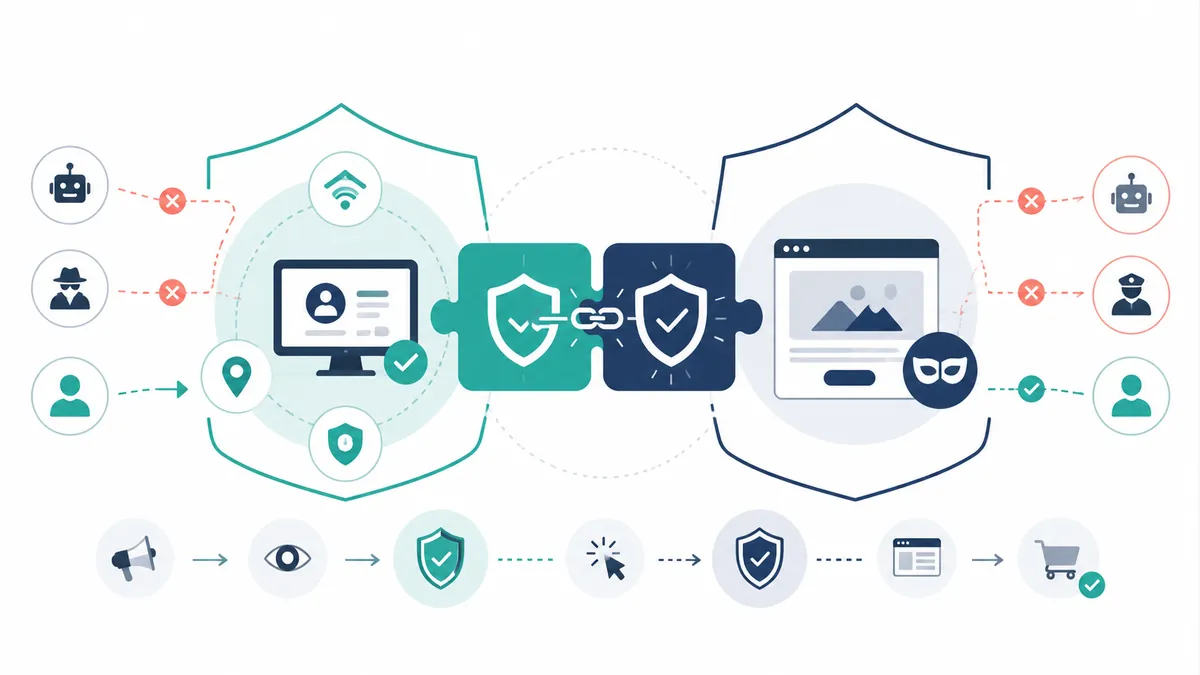
When your traffic goes through a PSB Proxy residential IP, you look like an ordinary user from the required country to the advertising platform — without red flags or suspicious ASNs.
How platforms detect cloaking
Now let’s look at the other side of the coin: ad moderation. When you are driving traffic to a “gray” offer, the main threat is the moderator and spy services that can copy your funnel.
Advertising platforms use the following to check ads:
- Automated bots — they follow links on schedule, save screenshots, and analyze content.
- Manual moderators — real people who visit the landing page and check whether it complies with the rules.
All of them have characteristic signals: specific IP ranges, user-agent strings, and behavioral patterns. The task of cloaking is to recognize them and show “safe” content, meaning a white page, while sending real users to the offer landing page.
How Cloaking.House works
Cloaking.House is a cloud-based traffic filtering service powered by machine learning and artificial intelligence. The service processes more than 10 billion clicks per month, constantly expanding its database of “unwanted” visitors.
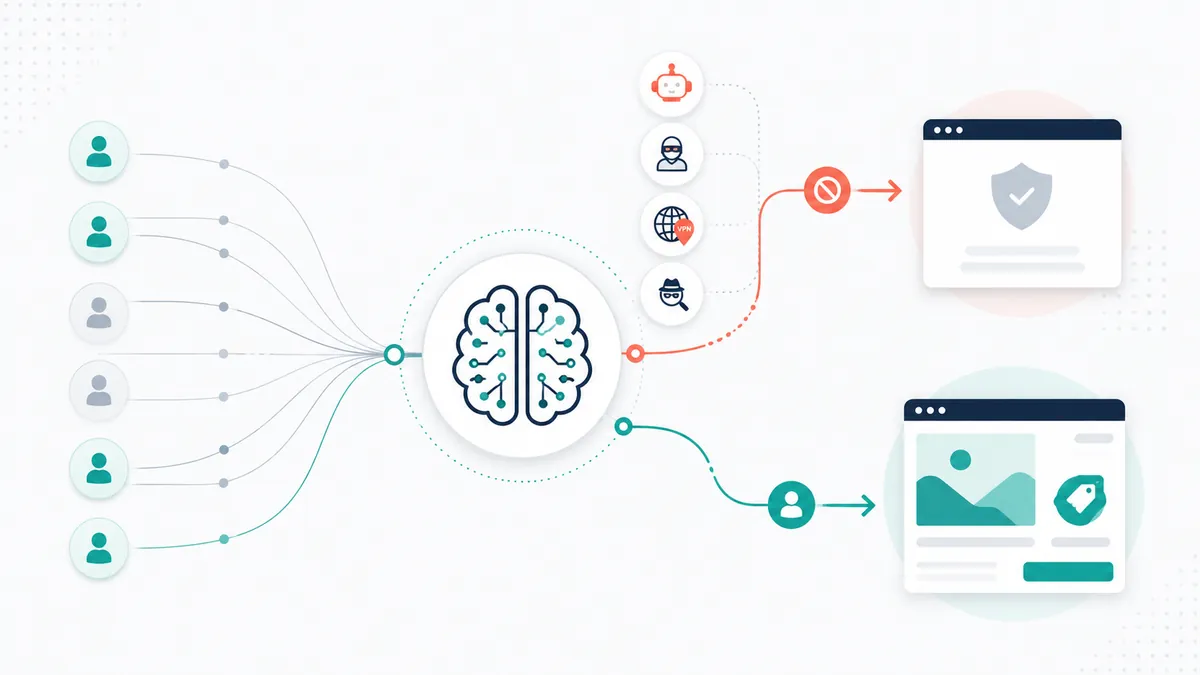
The principle is simple: every click on your link is checked against multiple parameters:
- IP type: proxy, datacenter, bot, or VPN.
- Country, operating system, and browser.
- Behavioral signals.
- Presence in known databases of moderators and spy services.
If a visitor is “suspicious,” they see a white page. A real user gets the offer.
Setup takes literally 2 minutes and does not require programming skills. You can connect your own domain or buy one directly inside the service. Detailed statistics are available by GEO, devices, flows, and time.
Proxies + cloaking: why this is a combination, not a replacement
It is important to understand that proxies and cloaking solve different tasks. They do not replace each other — they complement each other.
| Task | Tool |
|---|---|
| Hide the arbitrage specialist’s real IP when working with accounts | PSB Proxy |
| Filter bots and moderators away from the offer | Cloaking.House |
| Protect the funnel from spy services | Cloaking.House |
| Bypass geo restrictions and work with the required GEOs | PSB Proxy |
| Send a real user to the landing page | Cloaking.House |
In practice, a professional setup looks like this: you work with advertising accounts through PSB Proxy residential proxies and look like a local user, while Cloaking.House separates traffic on the landing page side. Real buyers go to the offer, while everyone else sees a harmless page.
What happens if you use only one tool
- Only proxies without cloaking — your account may look clean, but when a moderator clicks the ad, they will see the real offer and block it.
- Only cloaking without proper proxies — the landing page is protected, but the account exposes a “dirty” datacenter IP and gets banned at the account check stage.
Only together do these tools provide full protection across all levels of the funnel.
Cloaking.House promo code for PSB Proxy clients
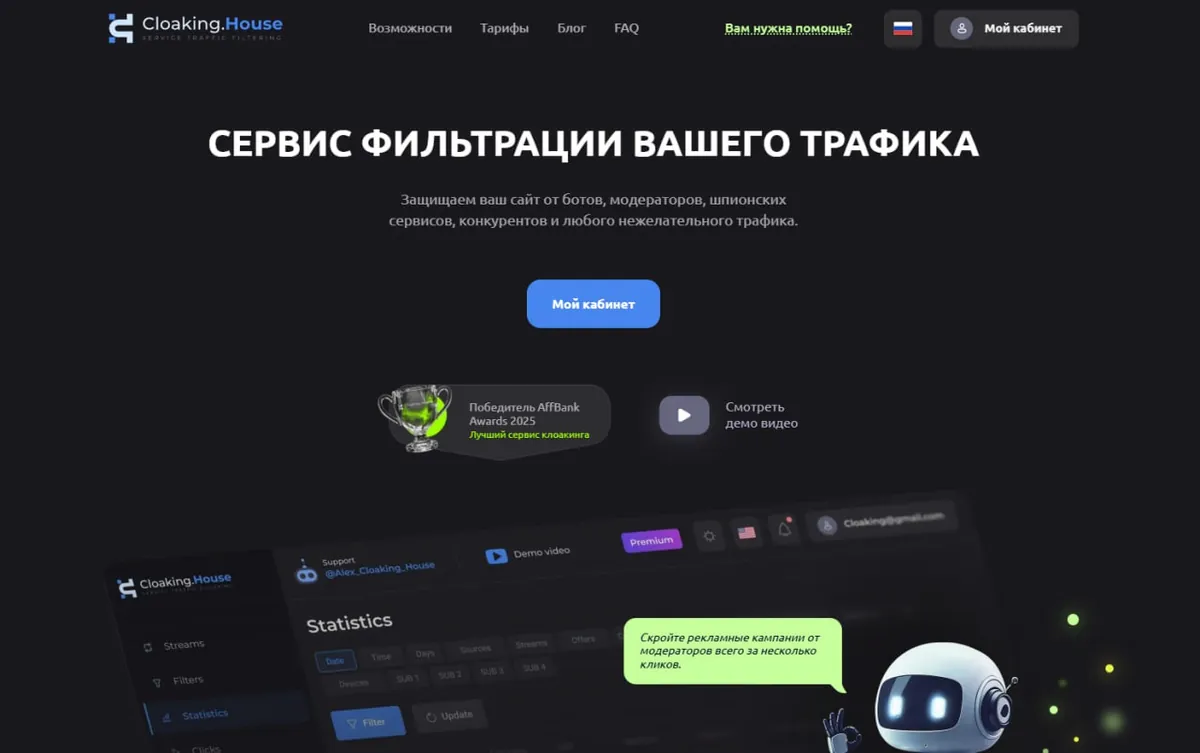
Especially for PSB Proxy clients, there is an exclusive promo code for Cloaking.House:
🎁 Promo code PSB30 — 30% off any Cloaking.House subscription.
Enter it when choosing a plan and get a full-featured cloaking tool at a better price. New users can also test the service for free for 7 days before purchasing.
Conclusion
Advertising platforms are getting smarter every month. They can recognize datacenter IPs, detect bots, and identify cloaking patterns. But arbitrage tools are evolving too.
PSB Proxy residential proxies provide a clean, “human” IP for working with accounts. Cloaking.House, powered by ML, protects your landing pages from moderators and spy services. Use both technologies together — and your campaigns will run more consistently, without unnecessary bans and stress.