

 Русский

 August 7, 2026
A captcha solver and a proxy service handle different parts of the same scraping workflow.
The proxy affects IP reputation, location, request history, and session stability. The captcha service processes the challenge and returns an answer or token.
A failure in either layer can stop the workflow.
A strong solver cannot prevent repeated challenges when the proxy has a poor reputation. A high-quality proxy cannot help when the returned captcha answer is rejected.
This comparison covers 2Captcha, SolveCaptcha, Anti-Captcha, CapSolver, and DBC using benchmark data from CaptchaTheCat.
It also explains how proxy type, sticky sessions, IP rotation, and geographic consistency affect real-world results.
The short answer
2Captcha and SolveCaptcha were the strongest providers in the benchmark.
Both achieved an average correctness rate of 89.17%.
Their strengths were different:
- 2Captcha returned results more consistently and performed better in several advanced categories.
- SolveCaptcha was slightly faster and led several speed tests.
- Anti-Captcha performed well in selected categories but was less consistent overall.
- CapSolver achieved a strong reCAPTCHA v2 result but took much longer.
- DBC could not be compared in detail because the available data was limited.
For mixed scraping workloads, 2Captcha offers the strongest overall balance. SolveCaptcha is the better option for time-sensitive sessions.
Why proxy quality matters
Anti-bot systems evaluate more than the captcha answer.
They may also examine:
- IP reputation;
- ASN and network type;
- country and city;
- request frequency;
- cookies;
- browser fingerprint;
- User-Agent;
- timezone and language;
- navigation behavior;
- IP changes during the session.
This creates two different failure types.
Solver-side failure
The provider returns an incorrect answer, an invalid token, an insufficient score, or no result.
Session-side failure
The answer may be valid, but the target rejects it because the IP, cookies, browser profile, or captcha parameters changed.
A benchmark mainly measures the solver.
Production testing must evaluate the full chain:
proxy → browser or HTTP client → captcha → solver → answer submission → target acceptance.
Benchmark metrics
| Metric | What it measures |
|---|---|
| Correctly solved % | How often the returned answer was accepted |
| Received % | How often the provider returned a result |
| Average recognition time | How long the provider took to return an answer |
| Average bid per 1,000 | Comparative benchmark indicator |
Correctness is the main metric because rejected answers create new challenges and consume more proxy traffic.
The received rate shows how reliably the service completes tasks.
Recognition time matters when the result arrives before the token or session expires.
The benchmark bid is included for comparison only. It is not an official public price.
Overall benchmark results
| Service | Recognition time | Received | Correctly solved | Bid per 1,000 |
|---|---|---|---|---|
| 2captcha.com | 19.38 sec. | 93.83% | 89.17% | 2.15 |
| solvecaptcha.com | 18.40 sec. | 92.50% | 89.17% | 1.05 |
| anti-captcha.com | 51.83 sec. | 87.17% | 65.83% | 2.51 |
2Captcha and SolveCaptcha achieved the same average correctness.
SolveCaptcha was about one second faster. 2Captcha returned results for a slightly larger share of tasks.
That difference matters because unanswered tasks continue to consume sticky proxy time, browser runtime, worker capacity, and traffic.
Anti-Captcha was significantly slower and recorded lower aggregate correctness and delivery rates.
Service overview
| Service | Model | Best use case |
|---|---|---|
| 2Captcha | Automated recognition with human workers | Mixed and unpredictable scraping workloads |
| SolveCaptcha | AI-based recognition | Time-sensitive sessions |
| Anti-Captcha | Primarily human-based processing | Selected captcha categories |
| CapSolver | AI-based processing | Specific automated challenge types |
| DBC | Established provider | Existing and legacy integrations |
2Captcha
2Captcha produced the strongest general-purpose profile.
It achieved:
- the highest average received rate;
- 100% correctness in reCAPTCHA v2;
- 100% correctness in reCAPTCHA v3;
- the highest correctness in the Cloudflare sample;
- the strongest advanced captcha result;
- 98% correctness in the high-complexity sample.
Its hybrid model is useful for scraping because the same website may show different challenges depending on the proxy, account, region, or request pattern.
Automated recognition can handle common tasks, while human workers provide another route for harder cases.
That makes 2Captcha the strongest default for multi-site scrapers and mixed captcha workloads.
SolveCaptcha
SolveCaptcha matched 2Captcha’s average correctness and was faster in:
- reCAPTCHA v2;
- reCAPTCHA v3;
- Cloudflare captcha;
- high-complexity captcha.
This matters when tokens expire quickly, sticky sessions must remain active, or browser time directly increases proxy costs.
Its received rate was slightly lower in some samples, so production tests should measure both timeouts and final page completion.
Other providers
Anti-Captcha performed well in selected categories, especially image captcha and reCAPTCHA v3. Its overall performance was less consistent.
CapSolver achieved 100% correctness in the reCAPTCHA v2 sample, but its average recognition time was much longer than that of 2Captcha and SolveCaptcha.
DBC may still be relevant for existing integrations, but the available benchmark data was too limited for a detailed comparison.
Results by captcha type
reCAPTCHA v2
| Service | Recognition time | Received | Correctly solved |
|---|---|---|---|
| 2captcha.com | 6.09 sec. | 100% | 100% |
| solvecaptcha.com | 5.34 sec. | 100% | 100% |
| capsolver.com | 28.00 sec. | 100% | 100% |
| anti-captcha.com | 55.00 sec. | 100% | 20% |
2Captcha, SolveCaptcha, and CapSolver solved every task correctly.
SolveCaptcha was the fastest, with 2Captcha less than one second behind. CapSolver matched their correctness but took much longer.
Best overall choices: 2Captcha and SolveCaptcha.
reCAPTCHA v3
| Service | Score distribution | Recognition time | Received | Correctly solved |
|---|---|---|---|---|
| 2captcha.com | 0.1: 32.58%; 0.9: 67.42% | 8.17 sec. | 100% | 100% |
| solvecaptcha.com | 0: 1.11%; 0.1: 33.33%; 0.9: 65.56% | 7.07 sec. | 100% | 98% |
| anti-captcha.com | 0.1: 20%; 0.3: 13.33%; 0.9: 66.67% | 17.00 sec. | 100% | 100% |
2Captcha delivered the strongest balance of correctness, delivery, and score distribution.
SolveCaptcha was faster, but its correctness rate was slightly lower.
Best for acceptance: 2Captcha.
Best for speed: SolveCaptcha.
Cloudflare captcha
| Service | Recognition time | Received | Correctly solved |
|---|---|---|---|
| 2captcha.com | 11 sec. | 100% | 87% |
| solvecaptcha.com | 10 sec. | 100% | 85% |
| anti-captcha.com | 25 sec. | 100% | 86% |
2Captcha had the highest correctness rate. SolveCaptcha was one second faster.
In production, proxy reputation and session consistency may matter more than this one-second gap.
Image captcha
| Service | Recognition time | Received | Correctly solved |
|---|---|---|---|
| 2captcha.com | 12 sec. | 98% | 53% |
| solvecaptcha.com | 12 sec. | 97% | 59% |
| anti-captcha.com | 14 sec. | 97% | 60% |
Anti-Captcha led correctness by one percentage point over SolveCaptcha.
2Captcha returned results most consistently.
Because image captcha performance depends heavily on language, distortion, layout, and image quality, this category should be tested with real examples.
Advanced captcha sample
| Service | Recognition time | Received | Correctly solved |
|---|---|---|---|
| 2captcha.com | 18 sec. | 85% | 97% |
| solvecaptcha.com | 19 sec. | 76% | 95% |
| anti-captcha.com | 53 sec. | 80% | 58% |
2Captcha led in correctness, result delivery, and recognition time.
This was the strongest result in its favor.
High-complexity captcha sample
| Service | Recognition time | Received | Correctly solved |
|---|---|---|---|
| 2captcha.com | 61 sec. | 80% | 98% |
| solvecaptcha.com | 57 sec. | 82% | 98% |
| anti-captcha.com | 147 sec. | 46% | 71% |
2Captcha and SolveCaptcha both reached 98% correctness.
SolveCaptcha was slightly faster and returned slightly more results.
How proxy type affects captcha frequency
The solver determines how a challenge is processed. The proxy affects how often that challenge appears.
Datacenter proxies
Datacenter proxies are fast and affordable, but their network ranges are easier to identify.
They work best for:
- less protected websites;
- scraper development;
- public pages;
- independent requests.
On protected targets, datacenter proxies may trigger more challenges and increase solver costs.
Residential proxies
Residential proxies use IP addresses associated with consumer internet providers.
They are better suited to:
- e-commerce scraping;
- localized search;
- price monitoring;
- account-based workflows;
- longer browser sessions.
A stable residential IP can reduce unnecessary challenges and improve session acceptance.
Mobile proxies
Mobile proxies use IP addresses assigned by cellular networks.
They are most useful for mobile applications, mobile search, advertising verification, and targets that evaluate mobile network identity.
They are more expensive and should be used only when the workflow requires them.
Rotation and sticky sessions
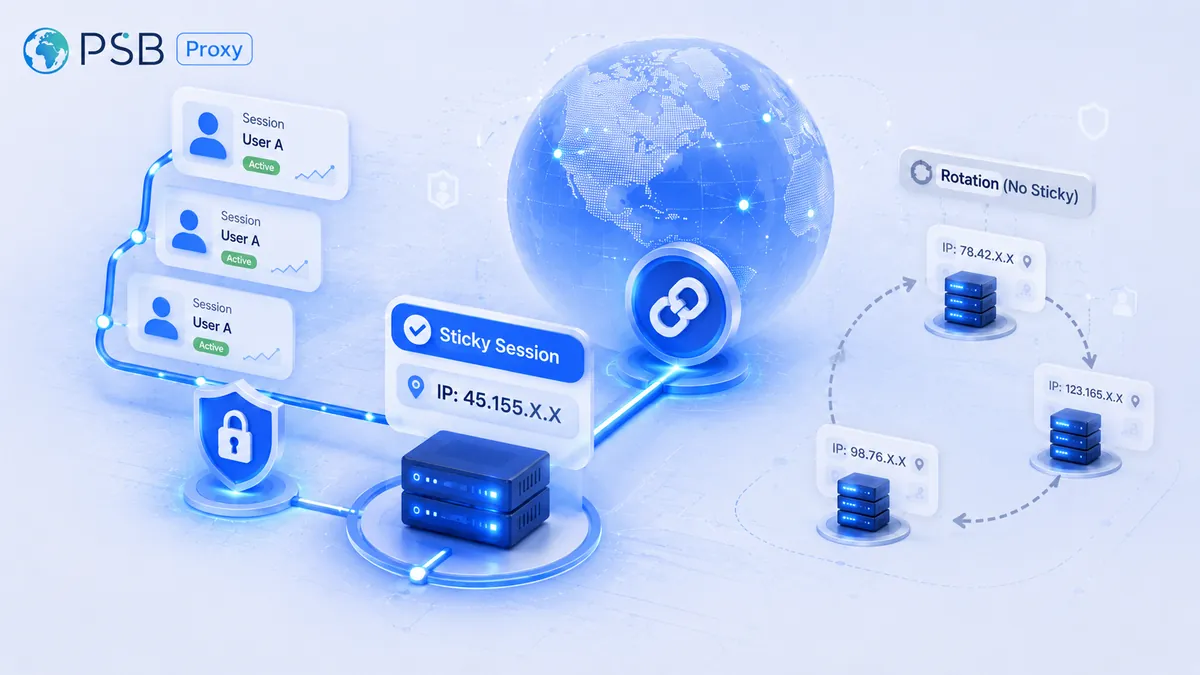
Rapid rotation works well for independent requests. It can break multi-step captcha workflows.
Use a sticky session when the workflow includes:
- authentication;
- several page transitions;
- a captcha;
- form submission;
- browser automation;
- session cookies.
Keep the same IP from the moment the challenge loads until the answer is submitted and accepted.
Rotating too early can invalidate a correct token.
Keep the session consistent
The following values should remain aligned:
- proxy country;
- browser timezone;
- browser language;
- locale headers;
- account region;
- cookies;
- User-Agent;
- browser profile.
A proxy in one country combined with an unrelated timezone, language, and account region can create additional risk signals.
Do not rotate after every failure
A rejected captcha does not automatically mean the proxy is blocked.
The cause may be:
- an incorrect answer;
- an expired challenge;
- changed captcha parameters;
- incorrect token submission;
- changed cookies;
- a recreated browser session;
- an IP change;
- a target-side timeout.
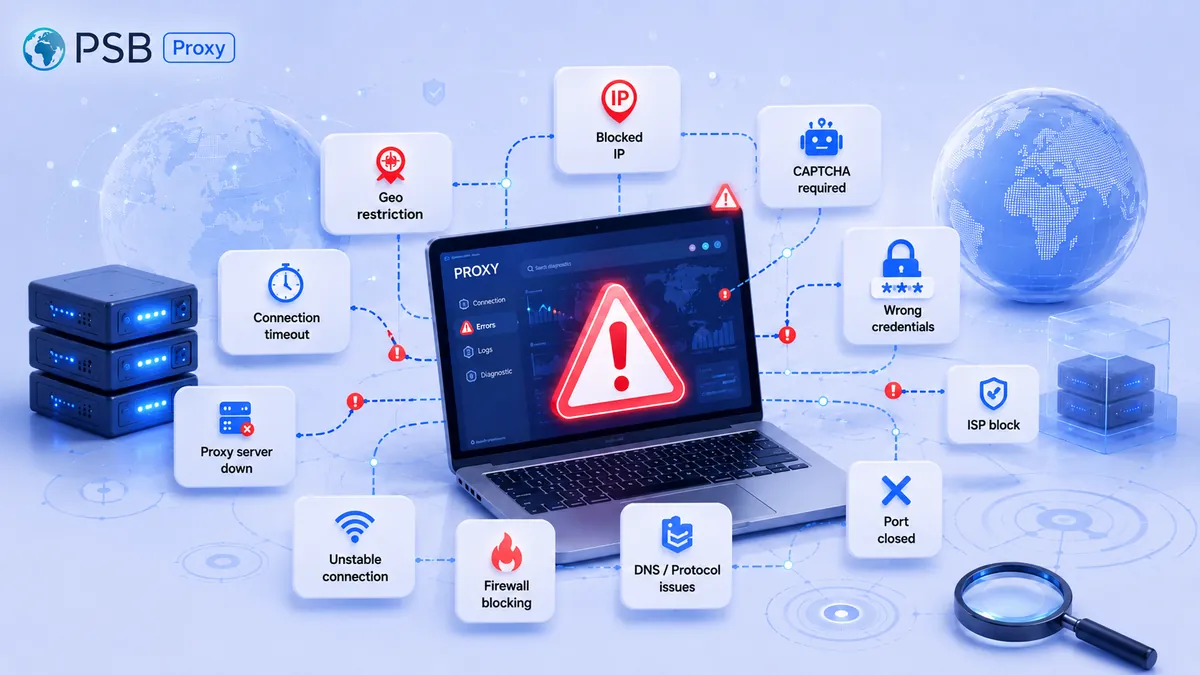
Classify the failure before deciding whether to retry the captcha, reload the challenge, preserve the proxy, or rebuild the session.
Blind rotation can destroy a valid session and create another challenge.
Use proxy fallback tiers
A practical setup can use several proxy levels:
- start with a datacenter proxy;
- detect repeated captchas or blocking;
- retry through a residential proxy;
- keep the residential IP sticky;
- use a mobile proxy only when required.
The captcha layer can follow a similar strategy:
- use 2Captcha as the main general-purpose provider;
- use SolveCaptcha for time-sensitive tasks;
- route selected image captchas according to target-specific tests.
Measure cost per successful page
The nominal solver bid does not represent the full scraping cost.
A better formula is:
Cost per successful page = proxy traffic + captcha tasks + browser runtime + retry costs, divided by accepted pages.
A cheaper solver may still cost more if it causes more rejected answers, reloads, retries, or longer sticky sessions.
The real goal is not the lowest captcha price. It is the lowest cost per successfully collected page.
Recommended combinations
| Scenario | Proxy setup | Captcha service |
|---|---|---|
| Mixed websites and captcha types | Residential proxies with controlled rotation | 2Captcha |
| Time-sensitive browser sessions | Sticky residential proxy | SolveCaptcha or 2Captcha |
| reCAPTCHA v2 | Residential or suitable datacenter proxy | 2Captcha or SolveCaptcha |
| reCAPTCHA v3 | Stable proxy and browser identity | 2Captcha |
| Cloudflare captcha | Sticky residential session | 2Captcha or SolveCaptcha |
| Image captcha | Test several proxy pools | SolveCaptcha, Anti-Captcha, or 2Captcha |
| Advanced challenges | Stable residential proxy | 2Captcha |
| High-complexity tasks | Long sticky session | 2Captcha or SolveCaptcha |
| Mobile workflows | Mobile proxy | Test 2Captcha and SolveCaptcha |
| Large-scale public data collection | Datacenter primary, residential fallback | 2Captcha |
Benchmark limitations
Actual performance may vary depending on:
- captcha type;
- target website;
- proxy pool;
- region;
- browser fingerprint;
- session age;
- request pattern;
- integration method.
The benchmark bid is not an official public price.
The benchmark also does not fully measure API quality, SDK support, geographic performance, fallback behavior, or reliability under sustained production load.
Conclusion
2Captcha and SolveCaptcha produced the strongest overall results.
2Captcha is the best general-purpose choice for web scraping. It combined high correctness, the highest average received rate, competitive speed, and strong performance across standard and advanced categories.
SolveCaptcha is the strongest alternative for time-sensitive workflows. It matched 2Captcha’s average correctness and returned answers faster in several tests.
For mixed scraping workloads, the strongest starting setup is:
- a proxy selected for the target;
- a sticky session for multi-step workflows;
- 2Captcha as the primary solver;
- SolveCaptcha for time-sensitive tasks or fallback.
The final decision should be based on accepted pages, proxy traffic, retry rates, session stability, and total workflow cost.