


 Русский

PARSING AND WEB SCRAPING
Proxies for parsing and web scraping
Collect public data from websites through distributed IPs, pick the geography you need and tune rotation to the volume and nature of your requests. PSB Proxy Residential, Mobile and Datacenter proxies fit price monitoring, SERP analysis, marketplaces and other web scraping tasks.
Tune the proxy to your data collection scenario
- PoolsResidential / Mobile / Datacenter
- Geocountry, state, city, ZIP, ASN
- Rotationper request or on a timer
- Sticky session1–1000 minutes
What are parsing and web scraping
Parsing is the processing and structuring of data: a program takes source content and extracts the elements it needs — for example prices, product names, specifications, links or search result positions.
Web scraping is the broader process of automated data collection from web pages. It usually includes loading pages, retrieving the needed content and then parsing the collected data.
In practice the terms are often used interchangeably. The main difference is that web scraping describes the whole process of collecting data from a site, while parsing is the step of analysing and converting the collected information into a convenient structure.
| Term | What happens | Example |
|---|---|---|
| Web scraping | Automated retrieval of data from web pages | Collect product pages of an online store |
| Parsing | Extracting and structuring the needed elements from the collected content | Extract the product name, price, availability and URL |
Why use proxies for web scraping
Proxies let you spread requests across IPs, get geo-dependent public content and control network session length during automated data collection.

Request distribution
Send independent requests through different IPs of the dynamic pool and choose the right rotation mode.

Geo-dependent data
Get public content as it is shown to users in the chosen country, region or city.

Long sessions
Pin the IP when a sequence of requests needs a single network context.
Automation
Connect proxies to scripts and internal tools via standard protocols and the Public API.
Which proxies to choose for parsing
The proxy type depends on the nature of the data, the request volume and whether a geographic or user network context is needed.
Datacenter
Dynamic server IPs for large volumes of independent requests and tasks where traffic cost matters.
From $0.70 / GBDatacenter proxies →Residential
IPs of real user connections for local content, SERP, e-commerce and price monitoring.
From $1.20 / GBResidential proxies →Mobile
IPs of real mobile carriers for sites and data where the mobile connection type matters.
From $2.10 / GBMobile proxies →Static Datacenter
A fixed server IP for a month for integrations and processes that need a permanent address.
$1 / IP / monthStatic DC →Static ISP
A permanent ISP IP for long processes that need a single internet provider network context.
$2 / IP / monthStatic ISP →What you can collect with proxies
Price monitoring
Collect public prices, discounts and price changes for products across regions.
Catalogs and marketplaces
Get available data on products, categories, specifications and stock.
Search results
Check SERPs and local search results for different countries and cities.
Competitor analysis
Collect public data on offers, assortment and changes on competitor websites.
Market research
Use public data to analyse the market, offers and regional differences.
Local content checks
Check language, currency, offers, redirects and regional versions of websites.
Which proxy type to choose for web scraping
| Proxy type | How the IP works | Best for | Price from |
|---|---|---|---|
| Datacenter | Server IPs, rotation per request or on a timer | Large volumes of independent requests | $0.70 / GB |
| Residential | Real user IPs, dynamic pool | Geo-dependent data, SERP, e-commerce | $1.20 / GB |
| Mobile | Mobile carrier IPs | Mobile-specific content and mobile versions of sites | $2.10 / GB |
| Static Datacenter | One server IP for a month | Integrations and processes with a permanent IP | $1 / IP / month |
| Static ISP | A permanent ISP IP for a month | Long processes with a permanent ISP context | $2 / IP / month |
Dynamic Datacenter proxies usually suit large-scale web scraping. If the data depends on geography or the user connection type, use Residential or Mobile. For whitelist integrations and a permanent address, Static Datacenter or Static ISP are the right fit.
Ready-made configurations for parsing tasks
Pick a ready-made configuration for your request volume, geography and session length requirements.
Bulk data collection
- Type
- Dynamic Datacenter
- Rotation
- On every request
- Session
- Not required
- Geo
- As needed
For a large number of independent requests and projects where traffic cost matters.
Regional price monitoring
- Type
- Residential
- Rotation
- Per request or on a timer
- Geo
- Country / city / ZIP
- Session
- If needed
For stores, catalogs and marketplaces where data depends on location.
Collecting data from the mobile version
- Type
- Mobile
- Rotation
- Per request or sticky
- Geo
- Country / region / city
- Session
- 1–1000 minutes
For tasks where data must be retrieved through a mobile carrier network.
Long request sequence
- Type
- Residential / Mobile / Static ISP
- IP
- Sticky or permanent
- TTL
- Up to 1000 minutes for dynamic
- Recommendation
- Up to 30 minutes for sticky
For processes where consecutive requests must keep a single network context.
Control IP changes while parsing
Residential, Mobile and dynamic Datacenter proxies offer different IP modes.
A new IP for independent requests
Use automatic address changes when requests don't need to keep a single network context.
Predictable IP changes
Set how long to keep one address, after which the pool assigns another IP.
One IP for a sequence
Keep the IP for a series of related requests.
Collect data from 195 countries
Dynamic pools let you choose a country, state or region, city, ZIP and ASN. Availability of specific locations changes and is updated from current service data.











Connect proxies to your parser or script
Use standard protocols, a convenient auth method and the Public API to connect proxies to parsers, scripts and internal tools.
HTTP / HTTPS
For HTTP clients, libraries, parsers and automation tools.
SOCKS5
For apps and tools that require a SOCKS connection.
Public API
Automate proxy and settings management via the API.
Authentication
Login/password, IP whitelist or token — all methods are available.
PSB Proxy capabilities for web scraping
Shared IP pool
Up to 90M IPsShared PSB Proxy infrastructure for all proxy types.

Geo
195 countriesAvailability of specific locations may change.

Ports
Up to 2,500The limit can be raised on request.

Protocols
HTTP / HTTPS / SOCKS5All protocols are available for all pools.

Sticky TTL
1–1000 minutesWe recommend not setting more than 30 minutes.

Uptime
99.8%The stated service availability figure.

Authentication
3 methodsLogin/password, IP whitelist and token.
Public API
IntegrationFor automated settings management.
Proxy pricing for parsing
Compare dynamic proxy plans and pick the one that fits your request volume and data type.
Datacenter
For bulk independent requests and tasks where traffic cost matters.
Datacenter pricingResidential
For SERP, e-commerce, price monitoring and local content.
Residential pricingMobile
For sites and data that require a mobile network.
Mobile pricingNeed a permanent IP? Static Datacenter — $1/IP per month, Static ISP — $2/IP per month.
Work with public data responsibly
Respect the rules of the target resource
Automated data collection must respect the website terms of use, technical restrictions, personal data processing rules, content and database rights, and applicable law.
Important. Do not use the service for hacking, phishing, spam, malware distribution, DDoS or other illegal activities.
Other proxy use cases
Proxies for SEO and SERP checks
Checking search results, local results and rankings across regions.
Proxies for SEO →Proxies for price monitoring
Collecting public prices, availability and offer changes on sites and marketplaces.
For price monitoring →Proxies for marketplaces
Working with catalogs, assortment, prices and regional offers.
For marketplaces →Proxies for market research
Collecting data on the market, competitors and local offers.
For research →Proxies for ad verification
Checking how ads and landing pages are shown across geographies.
For ad verification →Proxies for automation
Connecting proxies to scripts, bots, APIs and other automated processes.
For automation →Articles about proxies and web scraping

Proxies for Google Ads in 2026: why a clean IP beats a “good account”
In 2026 Google Ads checks the combination of IP, device and account history before it cares about your ad copy. AI Max and tighter trust che
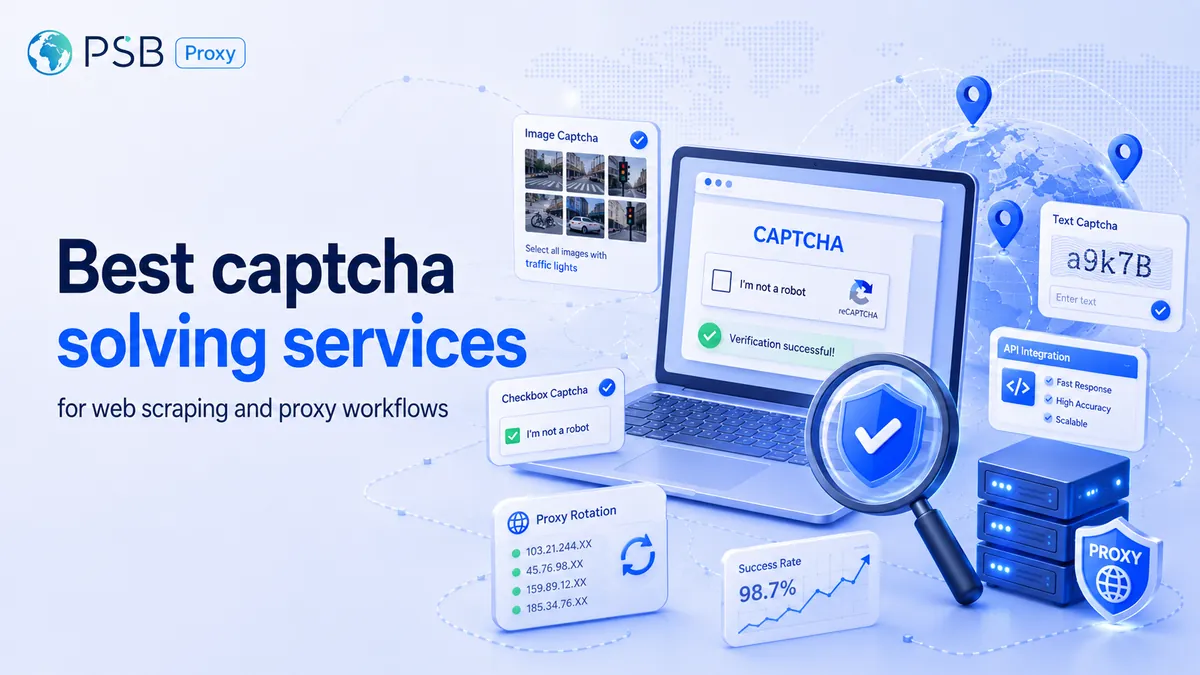
Best captcha solving services for web scraping and proxy workflows
A captcha solver and a proxy service handle different parts of the same scraping workflow. The proxy affects IP reputation, location, reque

Form, Chat, Quiz, or Callback: Which Website Tools Generate More Leads and Which Scenarios They Work Best In
Bringing a person to a website is only half the task. What happens next depends on how easy it is for them to take the next step. Some users
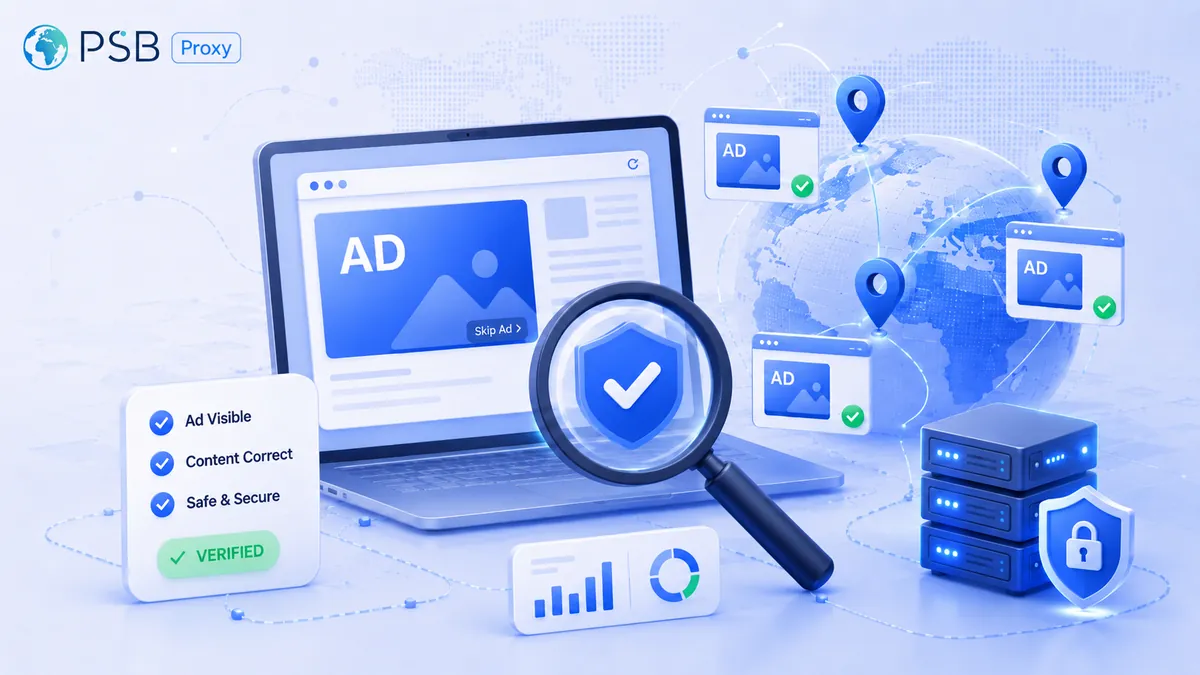
Ad verification: how to check ad impressions in different countries
When advertising is launched in several countries at once, the advertiser often sees only numbers in reports – impressions, clicks, reach. B
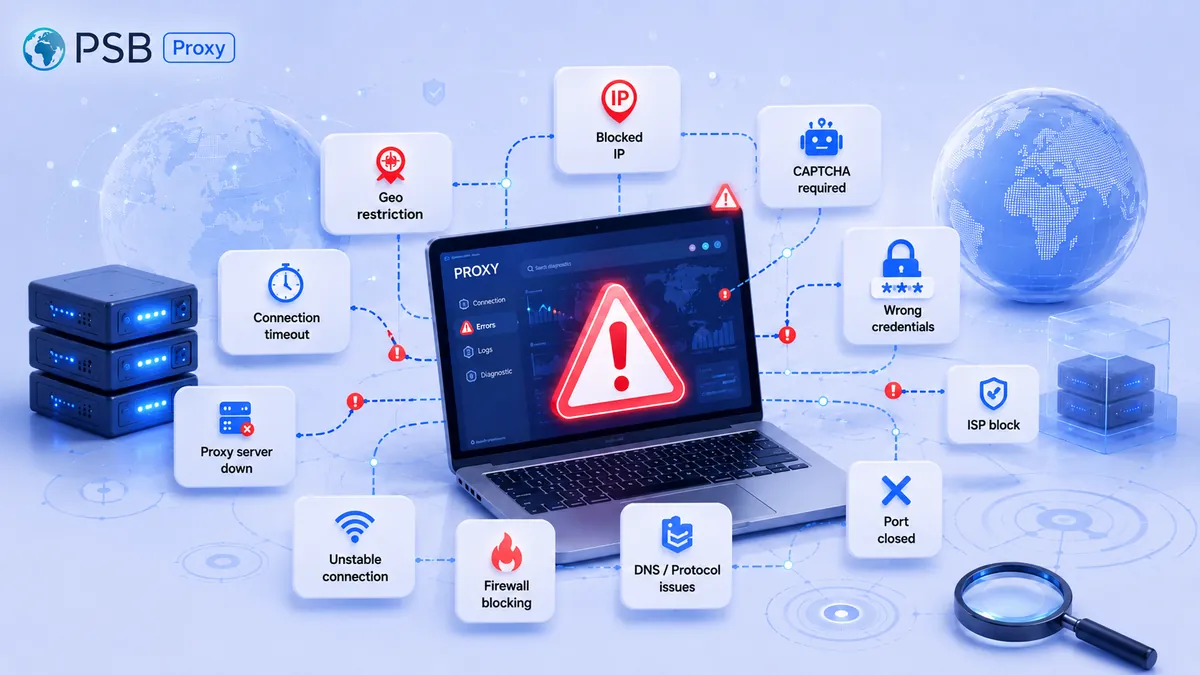
Why proxies don't work: 10 common causes of connection errors
Today, proxies are an indispensable tool for parsing, working with social networks, and ensuring privacy. But even the most reliable solutio
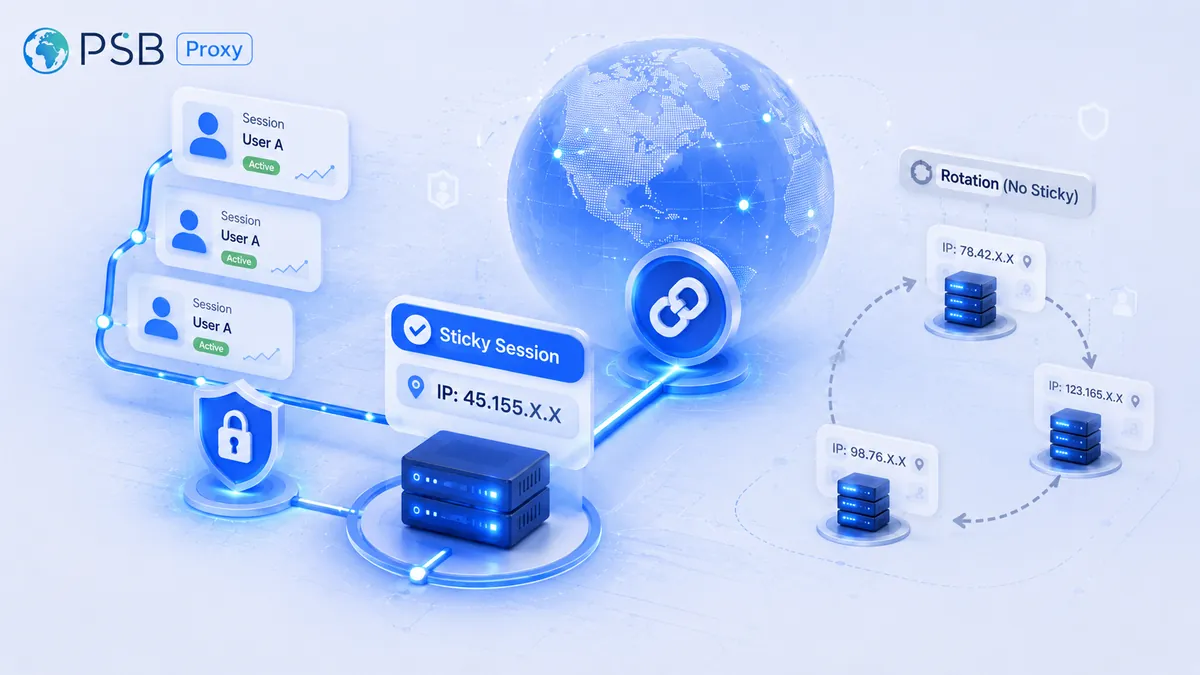
What Is a Sticky Session in a Proxy, and When Is It Better Than IP Rotation?
Website security systems now analyze not only the node’s IP address itself, but also request chains along with behavioral patterns. Therefor
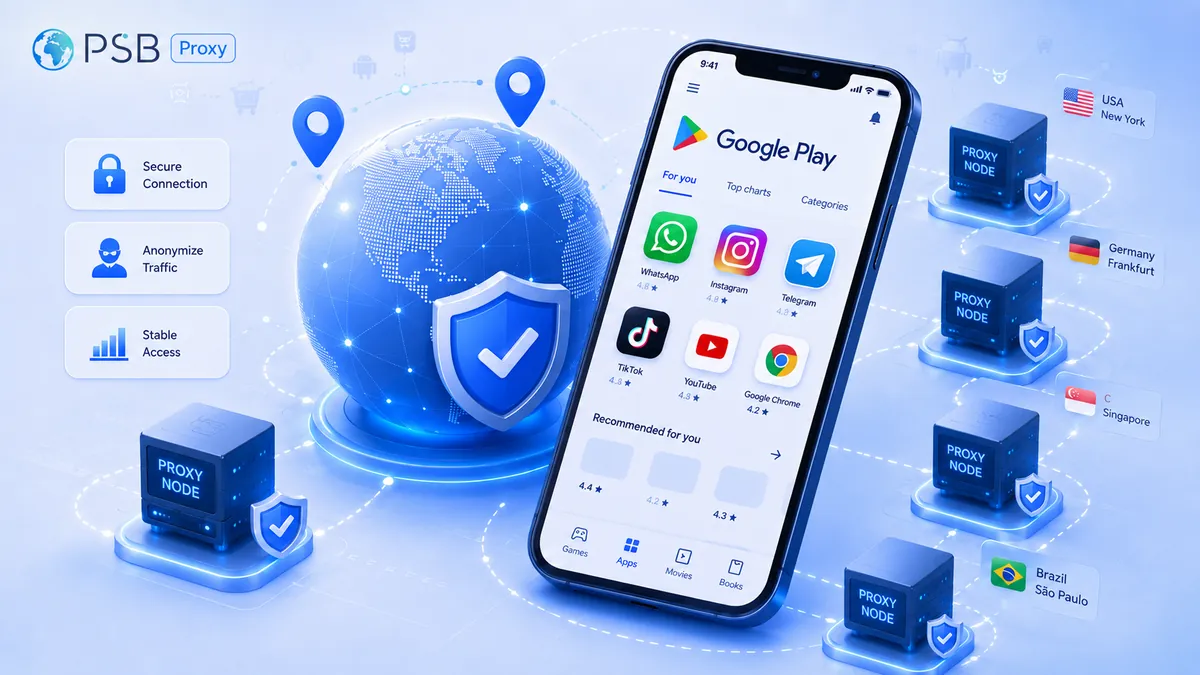
Proxies for Google Play: How to Check App Visibility, Localization, and Rankings in Different Countries
Development and marketing teams regularly check app visibility on Google Play, the accuracy of localization, and search rankings across diff
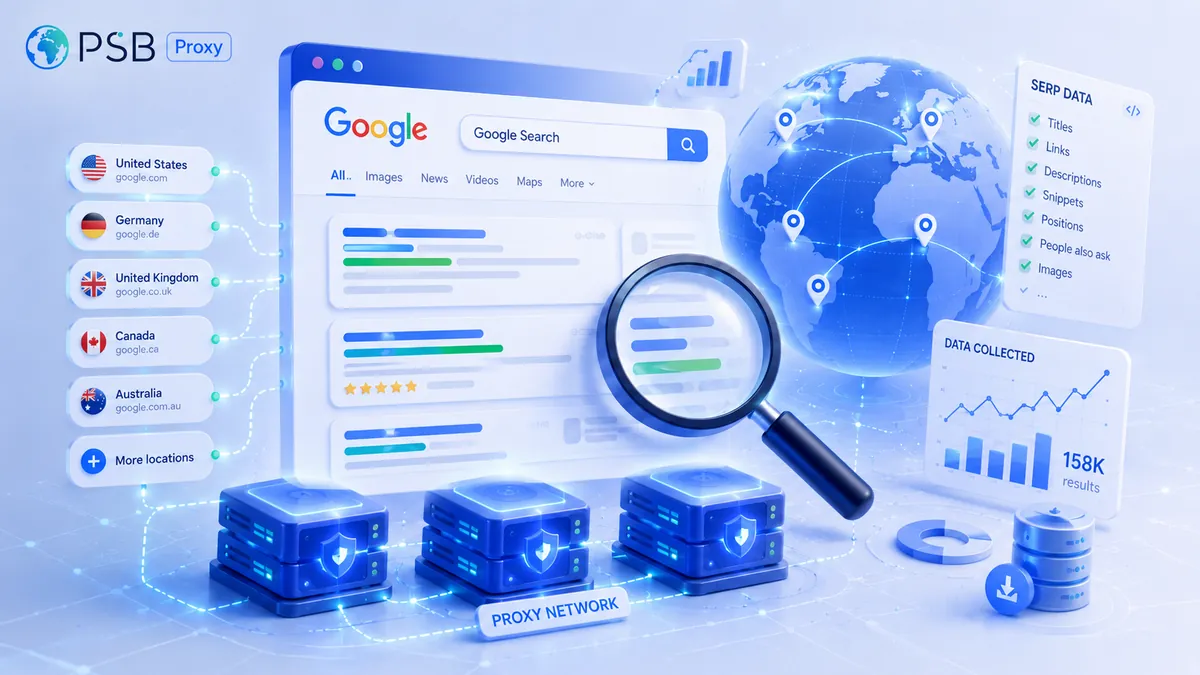
Proxies for Google Search and SERP Parsing: Which Ones to Choose to Reduce the Risk of Being Blocked
Parsing Google search results is central to most search marketing, SEO analytics, and competitor monitoring tasks. Collecting data on websit
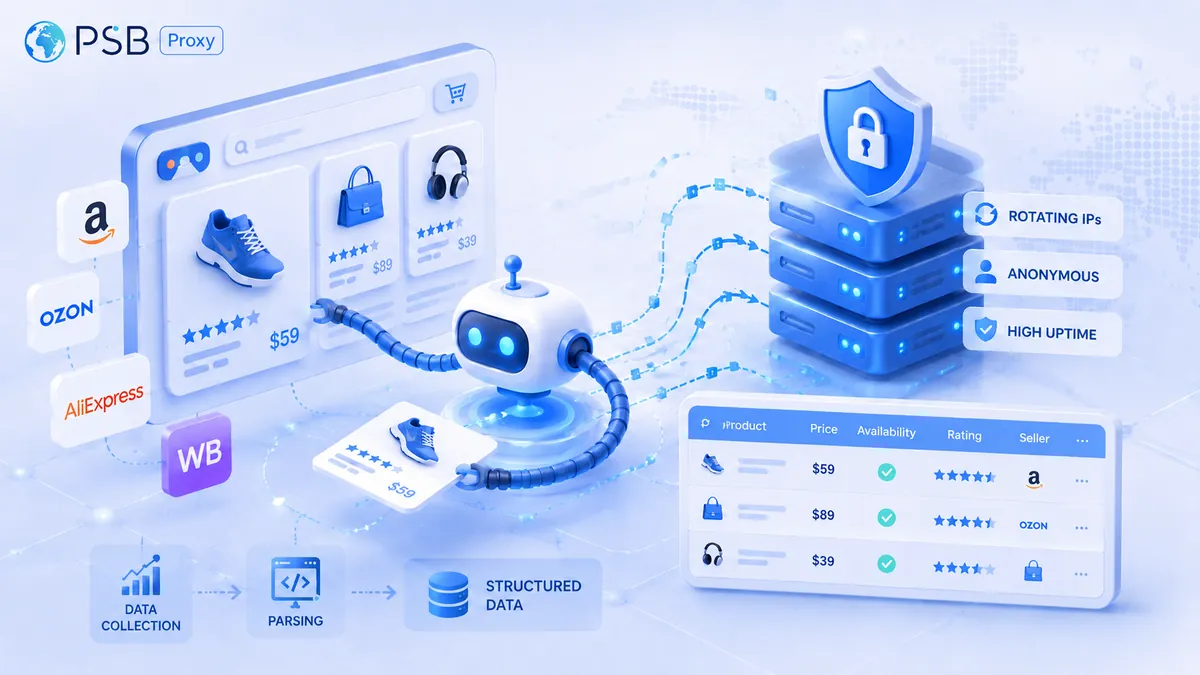
What types of proxies are needed for marketplace scraping: residential, mobile, or datacenter proxies?
Online stores, analytics services, and advertising agencies often collect information from e-commerce platforms using specialized data-parsi
How advertising platforms detect proxies and cloaking — and how to work around it
If you work in traffic arbitrage, you know this well: launching a campaign is only half the job. The other half is making sure Facebook (an
Parsing proxy FAQ
Which proxies are best for parsing?
Can the IP change on every request?
Can I keep one IP for the duration of parsing?
Can I choose a country or city?
Which proxy type suits large-scale web scraping?
Which protocols are supported?
Is there an API for integrating with a parser?
Does purchased traffic expire?
Is there a trial?
How many ports can be used at once?
Which authentication methods are available?
Can the proxies be used for any website?
Connect proxies to your parser
Choose the right proxy type, set up geography and rotation mode, and integrate PSB Proxy into your data collection process.