




 November 23, 2026
Partner content. Prepared by the Spy.House team.
In traffic arbitrage, finding an attractive offer, creating an ad creative, and launching a campaign is not enough. To achieve consistent results, marketers need to understand what is happening in the market, which strategies other advertisers are using, which GEOs show potential, and how advertising strategies evolve over time. That is why competitor research has become an essential part of the workflow for affiliate teams and independent media buyers.
Two tools play an important role in this process: spy tools and proxies. The first helps collect and analyze advertising materials, explore creatives, and identify promising approaches. The second provides flexibility when working with different GEOs, allows marketers to check advertising materials based on location, and helps organize research activities.
Each tool solves a specific set of problems on its own. However, they deliver the greatest value when used together. Let's explore how to combine them throughout the entire workflow: from market research and finding promising ad angles to testing your own hypotheses and launching campaigns.
Spy Tools: Why Analyze Competitors' Advertising Campaigns?
Spy tools are designed to monitor advertising activity and explore the ads used by other market participants. They allow marketers to discover advertising creatives, analyze copy, examine visual concepts, track different approaches, and gain insights into current trends within a particular niche.
Their primary purpose is to reduce the time spent searching for effective ideas and provide more information for making informed decisions.
Imagine the following situation: an affiliate marketer is planning to launch an advertising campaign in a new GEO. They have several offers but do not yet know which creatives to use, what audience needs to focus on, or which advertising formats are likely to perform best.
One option is to start experimenting from scratch, independently developing dozens of ad variations. However, this approach requires both time and budget. An alternative is to research the market first and see what solutions competitors are already using.
A spy tool helps collect initial information and identify several directions worth testing.
What tasks can competitor ad research help with?
1. Finding advertising creatives.
Marketers can explore images, videos, headlines, and ad copy used in a particular vertical. This helps them understand which visual concepts are most common and which formats deserve further attention.
2. Exploring advertising angles.
The same product can be promoted through different approaches: solving a problem, highlighting benefits, emotional motivation, or social proof. Analyzing other advertisers' campaigns helps identify which approaches are currently being used in the market.
3. Competitor research.
Monitoring advertising activity makes it possible to assess how competitive a niche is, identify active advertisers, and notice changes in their communication strategies.
4. Generating new hypotheses.
Even if a discovered creative cannot be used directly, it can serve as a starting point for developing an original concept. Sometimes, changing the presentation, visual approach, or key message is enough to create an entirely different advertising asset.
It is important to understand that an ad's continued presence in an advertising database does not guarantee that it is profitable. Spy tools provide information for analysis, but they do not reveal the actual economics of another advertiser's campaign. Therefore, discovered approaches should be treated as hypotheses that need to be tested independently.
Proxies: Why Are They Important for Advertising Market Research?
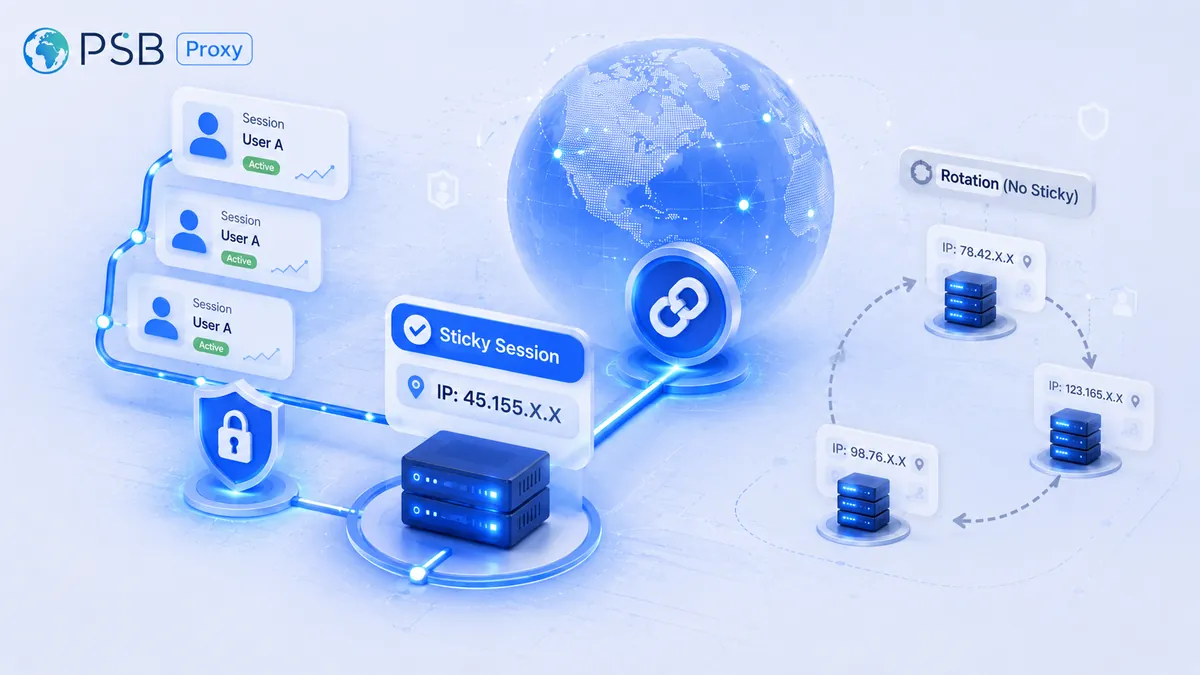
While spy tools help collect advertising information, proxies solve another important task: they provide the ability to work with online resources and check their availability using different IP addresses.
A proxy server acts as an intermediary between the user and the target resource. A request first passes through the proxy and is then forwarded to the required website or platform. As a result, the external resource sees the proxy's IP address rather than the user's original IP.
This is particularly relevant for affiliate marketers working with multiple GEOs, researching localized advertising, and checking how websites and ads appear to users in different regions.
For example, an advertiser wants to launch a campaign in several countries. However, advertising materials, landing pages, and offers may vary depending on the target audience's location.
Simply visiting a website from one country is not enough to understand how it appears to users in another region. Proxies make it possible to connect through IP addresses associated with specific countries and examine localized versions of online resources.
The main use cases for proxies in traffic arbitrage include:
1. Checking advertising materials by GEO.
The same offer may have different terms, images, copy, and promotional messages across various countries. Proxies help marketers check how websites and advertising materials are displayed when accessed from a particular region.
2. Researching local markets.
When entering a new GEO, it is important to consider the characteristics of the local audience. These include language, currency, popular payment methods, cultural differences, and consumer preferences. Connecting through regional IP addresses helps marketers explore the local environment.
3. Landing page testing.
Proxies allow marketers to test landing page availability and verify whether content is displayed correctly from different geographical locations. This is especially important when working with several countries simultaneously.
4. Organizing research activities.
When managing multiple campaigns and GEOs, specialists need to separate and organize their research tasks. Proxies help structure connections through different IP addresses and manage access parameters for online resources.
When choosing proxies, it is important to consider not only geographical coverage but also IP type, connection speed, stability, and address reputation. Some tasks may only require datacenter proxies, while others may benefit from residential or mobile options.
Why Are Spy Tools and Proxies More Effective When Used Together?
At first glance, spy tools and proxies may seem unrelated. One is responsible for collecting advertising information, while the other handles network connections. In practice, however, they complement each other at different stages of research and campaign preparation.
A spy tool helps discover interesting ads, advertising approaches, and potentially promising opportunities. Proxies make it possible to investigate this information further, check localized versions of websites, and evaluate the user experience in a specific GEO.
Let's look at an example of how these tools can work together.
An affiliate marketer chooses a vertical and plans to launch advertising campaigns in several countries. First, they open a spy tool and explore competitors' ads. During the research process, they discover several interesting creatives used by different advertisers.
The specialist then identifies recurring elements: visual concepts, headlines, advertising claims, and product presentation methods. Based on this information, they develop several hypotheses of their own.
The next step is to check landing pages and offers. For this purpose, proxies with IP addresses from the relevant countries are used. The specialist examines which landing page versions are available to users, whether the content is displayed correctly, and whether the offer terms match the advertising materials.
Once the research is complete, the advertiser can move on to preparing their own campaign.
This means that the tools cover different stages of the same workflow:
- Spy tools help discover interesting advertising approaches.
- Proxies make it possible to investigate regional differences and check resource availability.
- Analyzing the collected data helps generate advertising hypotheses.
- Independent testing helps determine which approaches actually work.
The main advantage of this approach is more informed campaign preparation. Instead of randomly choosing creatives and GEOs, marketers can rely on preliminary market research.
How to Organize the Workflow: From Finding an Ad Angle to Testing
To get the most out of using these tools together, it is important to establish a structured workflow. Simply having access to a spy tool and proxies does not guarantee good results. What matters is how effectively specialists use the information they collect.
Let's look at the main stages.
Step 1. Choosing a vertical and GEO.
The first step is to select a target market. This could be finance, gambling, nutra, dating, e-commerce, or another vertical.
At this stage, marketers should evaluate the potential audience, available advertising channels, market characteristics, and advertising platform requirements.
Step 2. Finding advertising approaches.
Once the direction has been selected, it is time to explore competitors' ads. It is important not to limit the research to just one or two creatives. Collecting a broader selection of materials makes it easier to identify recurring patterns.
Pay attention to visual elements, copy structure, marketing triggers, ad formats, and the way the offer is presented.
Step 3. Researching GEOs with proxies.
After identifying interesting advertising approaches, it is necessary to explore the selected regions in greater detail.
Proxies with IP addresses from the target country help marketers check localized website versions, landing page elements, and advertising material availability. This makes it possible to identify differences that might otherwise go unnoticed when browsing from a different location.
Step 4. Creating original creatives.
The collected information becomes the foundation for developing original advertising materials. Instead of simply copying competitors' ads, it is much more effective to identify promising ideas and adapt them to your own offer, audience, and advertising strategy.
Step 5. Testing hypotheses.
The next stage is launching test campaigns. Ideally, hypotheses should be tested systematically: changing individual elements, comparing results, and tracking performance metrics.
This makes it easier to understand which decisions actually affect campaign performance and which fail to deliver the expected results.
Step 6. Optimization and scaling.
Once enough data has been collected, marketers can pause ineffective variations, redistribute budgets, and expand successful campaigns. When entering new GEOs, the research process should be repeated while taking the characteristics of each new market into account.
How to Choose the Right Proxies for Your Workflow
The effectiveness of market research largely depends on proxy quality. An unsuitable connection type can create additional difficulties: slow page loading, frequent connection interruptions, or insufficient geographical coverage.
There are several main types of proxies.
Datacenter proxies.
These IP addresses are provided by data centers. Their main advantages are high speed, stable connections, and relatively low costs. They are suitable for many technical tasks, collecting publicly available information, and checking resource availability. However, some platforms may identify these IP addresses as belonging to data centers.
Residential proxies.
These are IP addresses associated with home internet connections. They allow users to conduct research through addresses typically associated with residential networks. This option can be useful for examining localized website content and checking the user experience in specific countries.
Mobile proxies.
These use IP addresses provided by mobile network operators. They are relevant for tasks involving mobile traffic research, checking how pages appear through mobile connections, and exploring access patterns across mobile networks.
The right choice depends on the specific task. There is not always a reason to pay extra for mobile or residential IPs if datacenter proxies are sufficient for the research. On the other hand, choosing a lower-quality connection to save money may be counterproductive when accurate localization testing is required.
It is also worth considering geographical coverage, speed, connection stability, the ability to select specific regions, and transparent service conditions.
Common Mistakes When Using Spy Tools and Proxies
Even high-quality tools cannot guarantee results if they are used without a clear strategy. Let's look at some common mistakes.
Copying competitors' creatives without analyzing them.
An ad may look attractive, but that does not mean it generates profit. The advertiser may have different offer terms, an entirely different audience, budget, and marketing strategy. It is better to analyze the principles behind a creative rather than copy it entirely.
Focusing only on the number of ads.
A large number of discovered materials does not necessarily indicate that a niche is promising. It is much more important to identify patterns, evaluate the quality of advertising approaches, and compare the information with other available data.
Using unsuitable proxies.
If a specialist needs to explore a localized version of a website but connects through an IP address from another country or an unsuitable IP type, the research results may be inaccurate.
Failing to organize research data.
Collected creatives, links, and observations quickly lose their value if they are not stored in an accessible format. It is better to maintain a dedicated research database and record GEOs, discovery dates, advertising approaches, and testing results.
Expecting immediate results.
Neither spy tools nor proxies are tools that automatically generate profit. They help collect information and optimize workflows, but the final outcome depends on offer quality, creatives, advertising settings, analytics, and many other factors.
Conclusion: Two Tools, One Strategy
Spy tools (Spy.House) and proxies solve different problems, but this is precisely why using them together is particularly valuable in traffic arbitrage.
Spy tools help marketers explore the advertising market, discover interesting creatives, analyze competitors' approaches, and generate new hypotheses. Proxies provide the ability to investigate regional differences, check website availability, and evaluate the user experience based on geographical location.
Together, they make it possible to build a more structured workflow: from initial market research to preparing and testing independent advertising campaigns.
At the same time, it is important to remember that these tools do not replace professional analytics or guarantee that competitors' results can be replicated. Their purpose is to provide specialists with more information for decision-making, reduce the time required for preliminary research, and help avoid some common mistakes at the initial stages.
In an increasingly competitive market, the winners are not necessarily those who launch campaigns the fastest, but those who know how to analyze the market, test hypotheses, and adapt their strategies to specific audiences. This is where the real value of combining spy tools and proxies lies.
You can pick proxies for ad research and campaign launches at PSB Proxy: residential proxies for viewing ads and search results by geo, mobile 4G/5G proxies for mobile placements and social networks. More on choosing: proxies for ad verification.