

 Русский

 August 11, 2025
Proxies are intermediary servers between internet resources and clients. Thanks to them, websites do not see users’ real IP addresses. This increases security and privacy. Traffic is saved, content is filtered, and load is balanced. Unlike data center proxies, which use pools of IPs from a single location, residential proxies mask users by using real IP addresses from tens of millions in their database – for example, PSB offers fast rotation and unlimited simultaneous sessions. This significantly improves the quality of their service.
How residential proxies work
Residential proxies are an important tool for anonymous and secure internet browsing. They provide clients with IP addresses identical to real, live traffic. This feature is valuable for arbitrage specialists, marketers, web scrapers, and for precise geotargeting when bypassing restrictions. Users are also interested in the full range of services provided by residential proxy servers and the legality of transferring real IP addresses from actual people to clients.
The general principle is traditional:
- A user sends a request to access a website through a residential proxy server.
- The proxy routes the request to the site, inserting a residential IP address from one of the real home devices.
- The site processes the request and responds to the residential IP.
- The proxy forwards the data back to the client.
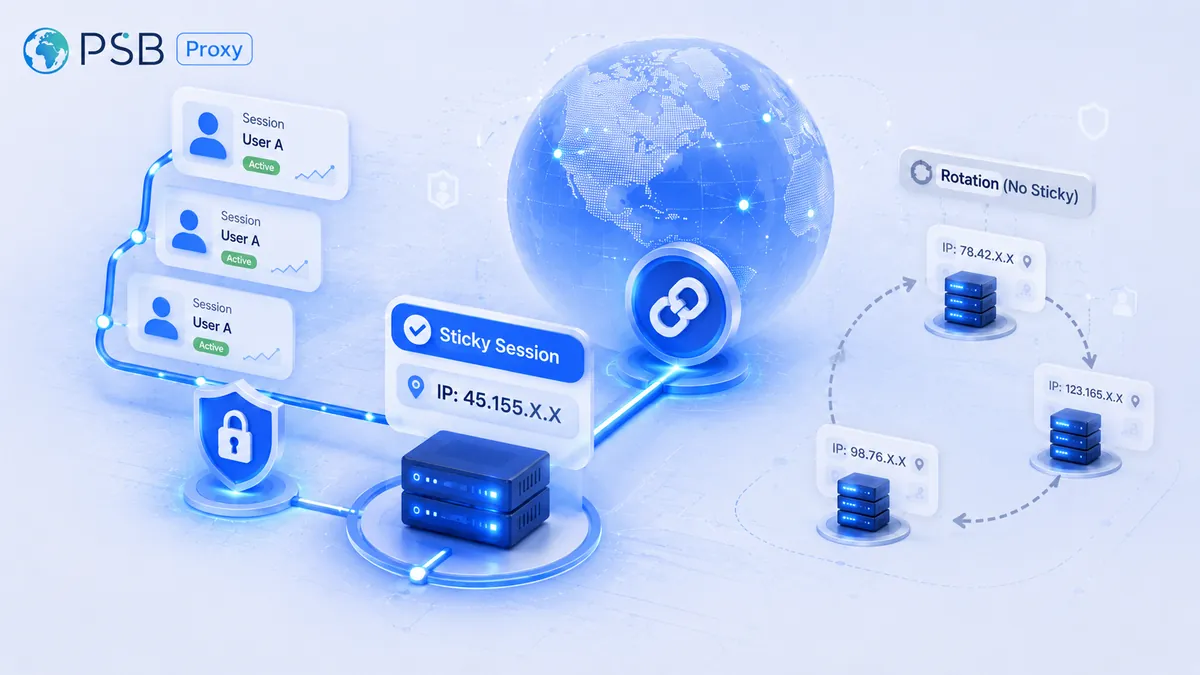
As a result, the website sees a real IP address, while the user receives the requested data without exposing their actual IP. Residential proxies use a large pool of IP addresses, automatically changing them with each new request. Clients can select the timing and duration of IP rotation, country, and city. This enhances control and helps bypass restrictions.
Sources of IPs
Real IP addresses are typically obtained through several methods:
- Voluntary participation in residential proxy networks under partnership agreements. These partners provide their IP addresses in exchange for compensation from the residential proxy provider according to tariffs. This scheme is fully transparent but has a nuance: lower prices are mostly accepted by clients from less developed countries with lower income levels.
- Partnership agreements with internet providers who supply ready-made IP address pools to the residential proxy. These providers must inform their users that their IPs may be used by third parties. In this scheme, the responsibility for transparency lies with the providers.
- Aggregation and leasing of IP addresses to residential proxies. Similar to the previous method, but here an aggregator company collects IP pools from providers and resells or leases them to the residential proxy provider.
- IP addresses from existing infrastructures. Proxy providers can collect addresses from suppliers of physical devices (like routers).
- Applications that collect IP addresses independently of regions. It is assumed that such collection is performed by conditionally free services.
As a final option, decentralized VPN services can also be considered.
Distribution Technology
The distribution of residential proxies is similar to courier mail delivery. You send a letter via a courier without wanting to reveal yourself. The courier delivers the letter with the sender listed as themselves or a third party. The recipient reads a letter not from you, but from the third party:
- Your computer sends a request to the proxy server.
- The proxy receives the request and replaces your address with one from its pool, then sends the request to the target server.
- The site on the target server sees the request coming from a different real person's address, responds, and the server sends the reply to your proxy.
- The proxy forwards the response to you, keeping your real address hidden.
For the next request, a new real person's IP will be used to send the request on your behalf. In settings, you can specify preferred locations for IP rotation.
Types of Residential Proxies
Residential proxies occupy a distinct place in the proxy classification:
- By protocols – they use the same protocols: HTTP, HTTPS, SOCKS.
- By anonymity – they are neither transparent nor private (hiding) servers, but distorting ones. They replace user data with substitute data from real people.
- By location – not centralized in one place, but distributed worldwide.
- By accessibility – available only to paid subscribers.
By IP rotation frequency, they can be:
- Static – fixed substitute IPs assigned long-term to one user (for social media accounts or platforms tracking IP changes).
- Dynamic – constantly changing IPs with rotation algorithms based on time, number of requests, user command, disconnects, and other criteria tailored for different tasks.
By purpose, residential proxies can be divided into:
- For networks like Instagram, supporting business and brand growth by changing IPs in the required country, bypassing blocks, increasing visibility and conversions, boosting traffic, avoiding bans, and maintaining high speed.
- For targeting – conducting competitor analysis, running ad campaigns in different regions without blocks on social networks, search engines, and websites.
- For marketplaces like eBay and Amazon – tracking prices and competitor offers.
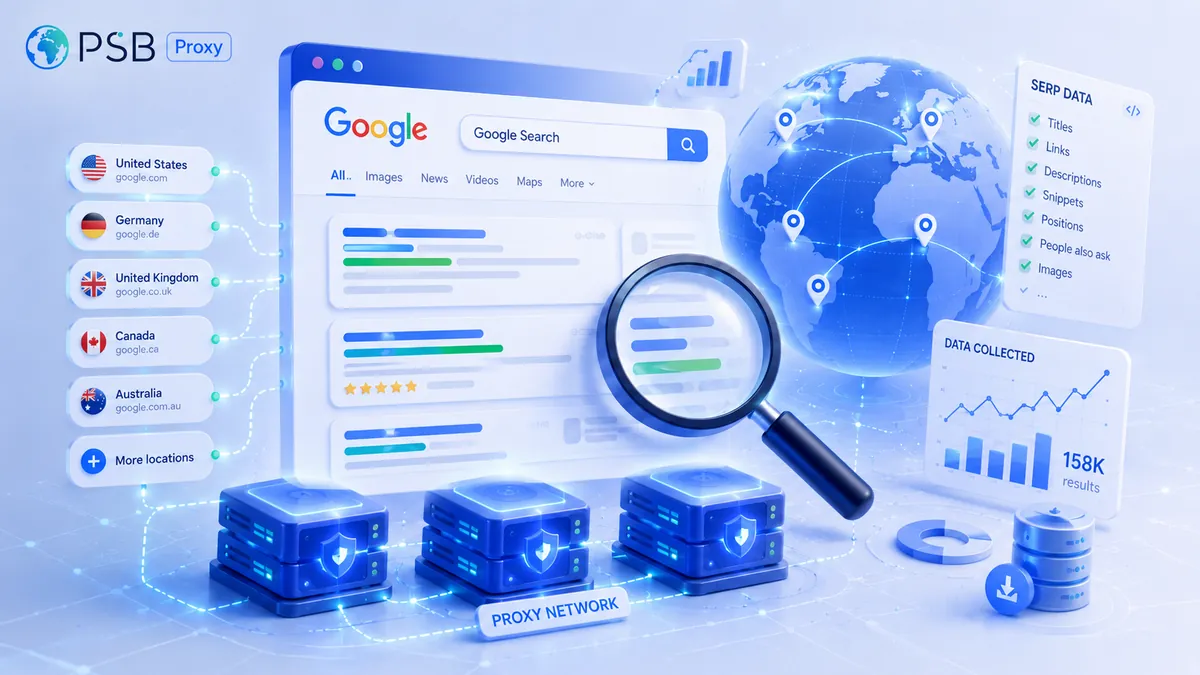
For practical use, residential proxies are essential for web marketers and business owners for ad verification, page scraping, SEO optimization, SMM promotion, resource testing, and market price monitoring.
Why Residential Proxies Are Better Than Mobile and Data Center Proxies
General advantages of residential proxies:
- Unlimited simultaneous sessions.
- Instant IP changes with convenient rotation and automatic switching based on desired intervals and parameters.
- Session fixation by time. Personal proxy assignment.
- High trust level.
Advantages of residential proxies over data center proxies:
- The main difference is the source of IPs – from real users’ physical devices. Data center IPs are artificial, provided by hosting providers.
- High-level masking with real traffic imitation. Data centers are easily detected by anti-bot systems under high-frequency requests.
- Realistic proxy geolocation with precision down to districts – ideal for targeted advertising. Advertisers don’t get suspicious. Data centers provide limited location info, usually only at country or sometimes city level.
Advantages over mobile proxies:
- Reliability. Mobile proxies are less stable.
- More realistic different IP addresses.
- Much higher speed compared to mobile connections.
- Unlimited geolocation options. Mobile proxies have very limited location choices.
- Cost is significantly lower than mobile proxies.
Disadvantages of residential proxies:
- More expensive than data centers.
- Lower speed compared to data centers due to switching.
- Smaller number of IP addresses (tens of millions) versus virtually unlimited artificial IPs of data centers.
- Variable speed and ethical concerns in usage.
Comparison of Residential, Mobile, and Data Center Proxies
A table of parameters comparing the three proxy types is provided below.
| Parameters | Residential | Mobile | Data Center |
|---|---|---|---|
| IP Source | Real devices: home PCs and mobiles | Tablets, smartphones on 3G, 4G, LTE networks | Artificial from hosting providers |
| Level of Anonymity | High | High | Medium |
| Risk of Blocking | Low | Moderate | High |
| Connection Speed | Medium-high | Low | Very high |
| Geolocation | Wide coverage of all countries | Limited | Limited choice |
| Reliability | Stable, but depends on pools | Low | Stable, for servers |
| IP Rotation | Static addresses | Dynamic | Configurable dynamic |
| Price | Medium-high | Very high | Low |
| Ideal Use Cases | Precise targeting, anti-bot, social media, search, contextual, scraping, testing | Social media, frequent IP changes, marketing, mobile targeting | Mass scraping, SEO, automation |
| Chances of Getting Blacklisted | Low | Low | High |
| Scalability by Addresses and Traffic Volume | Medium-high | Low | Very high |
Where to Buy Residential Proxies
You can purchase these servers from various providers, taking into account your needs and their offers.
Top Providers of 2025
According to many expert ratings, the following providers frequently appear on lists:
- PSB (psbproxy.io) – 40 million residential IPs, over 200 countries worldwide, $2/GB. City-level detail, unlimited traffic, all protocols supported.
- GonzoProxy – 20 million addresses, 150 countries, $2/GB. Operates via Google.
- Froxy – 10 million IPs in 200 countries, $6.8/month. Auto-rotation by time and parameters.
- Astro – 2 million ethical nodes, over 100 countries, 60 RUB/100 MB. Choose geolocation and ISPs. Support via Telegram.
- LunaProxy – 200 million pools in 195 countries, $0.77/GB. City-level detail. 99.9% uptime.
- IPRoyal – 34 million addresses in 195 countries, $1.75/GB. Ethical networks, analytics, 24/7 support.
- Proxy-store – 25 million from 50 countries, $18/month. Stable connection, 234 locations.
These providers have high ratings in various tabloids.
How to Choose
Consider these criteria for selection:
- Define your usage goals.
- Importance of anonymity. For networks blocking any suspicious activity, choose residential proxies with real IPs.
- Traffic volume. Data centers are better for large volumes.
- Budget vs. masking quality – if masking is more important, choose residential proxies; if price is the priority, go for data centers.
- Geolocation requirements – residential and mobile proxies lead here.
By comparing the parameters from the table, you can select the optimal proxy server for your tasks.
Is It Possible to Get Residential Proxies for Free?
There are many offers of free residential proxies online. At best, these are temporary free trials designed to attract clients to paid services later. However, scams are likely.
Risks of Free Options
Real risks include:
- Due to a large number of subscribers, speeds are low and connection quality is poor. Constant ads.
- Often, like other services, they ask for a $1 payment that is immediately refunded – a «seriousness check». Cookies leak, and your payment details may be at risk.
- Low security. Unsecured protocols without encryption are used.
- Risk of malware. Their ads can act as gateways for hackers.
Therefore, if you want to save money and protect your privacy, it’s best to avoid free proxies for serious work.
Alternatives
A good alternative can be VPNs – special tunnels that encrypt content and mask users. But proxies additionally filter traffic streams and significantly improve performance. Residential proxies create real «live» requests.
So, for simple casual browsing, VPNs are enough. But for professional work with diverse tasks, proxies are needed, and the best option is residential proxies.
Conclusion
Residential proxies are a powerful tool for anonymous internet use, extensive marketing, and research tasks. Without traffic limits, they replace your IP with another real address. They create realistic requests and gain resource trust, bypassing blocks. Perfect for arbitrage, marketing, targeting, and especially geotargeting. They solve most tasks requiring connection stability and speed.